Why a carry on makeup kit matters in real travel and retail use
A carry on makeup kit looks simple at first glance, but for buyers, product teams, and beauty brands it solves a surprisingly practical problem: how to keep a complete color routine compact, organized, and usable in tight spaces. When a traveler opens a bag at an airport, checks into a hotel, or does a quick touch-up before a client meeting, there is no patience for loose pans, missing brushes, or a mirror that is too small to be useful. A well-built kit keeps the routine in one place and reduces the usual mess that comes with several separate products.
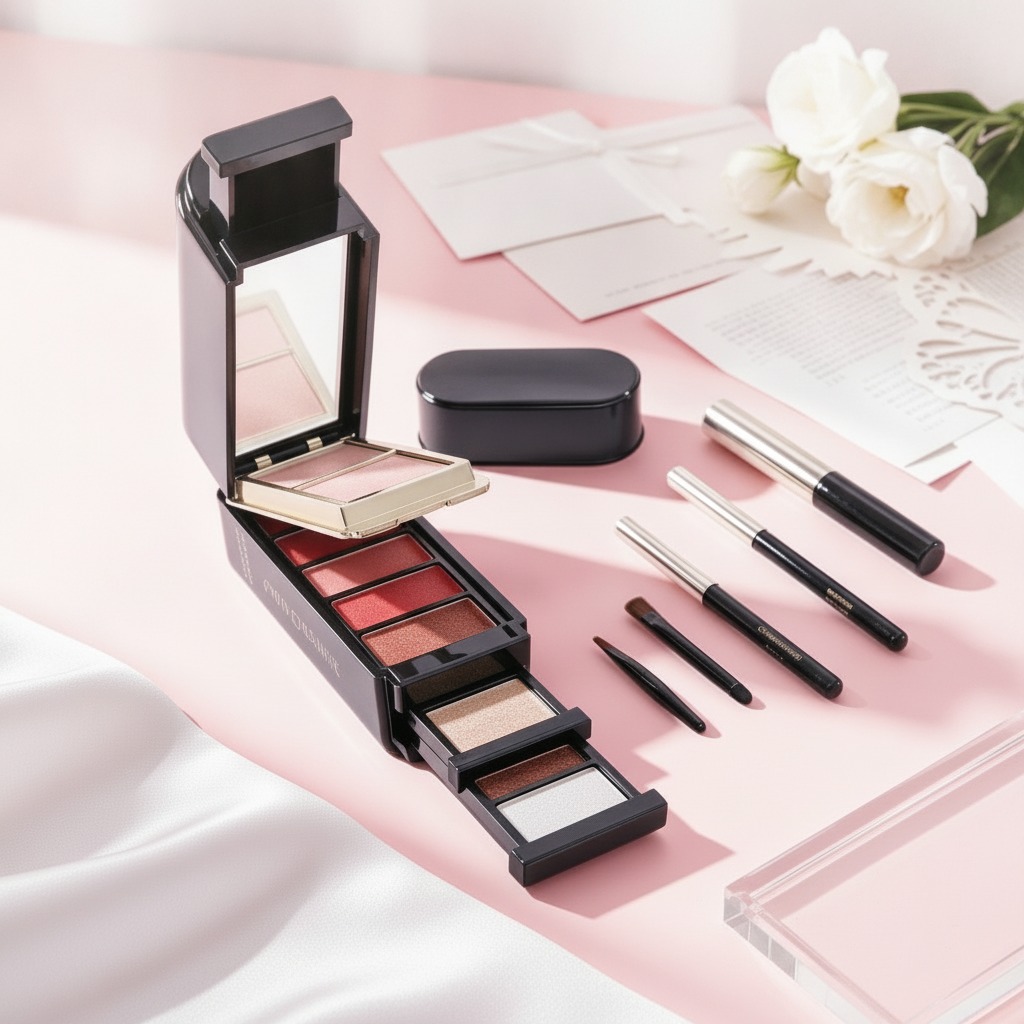
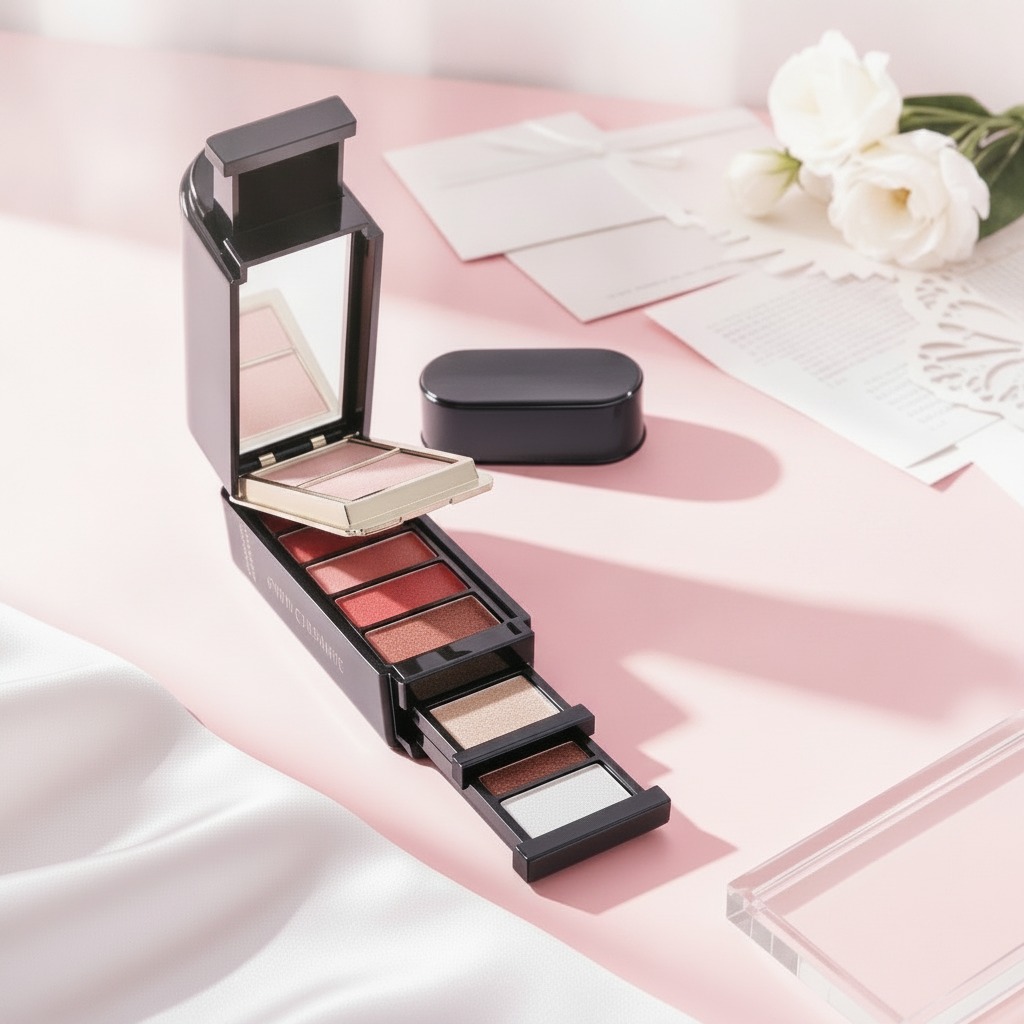
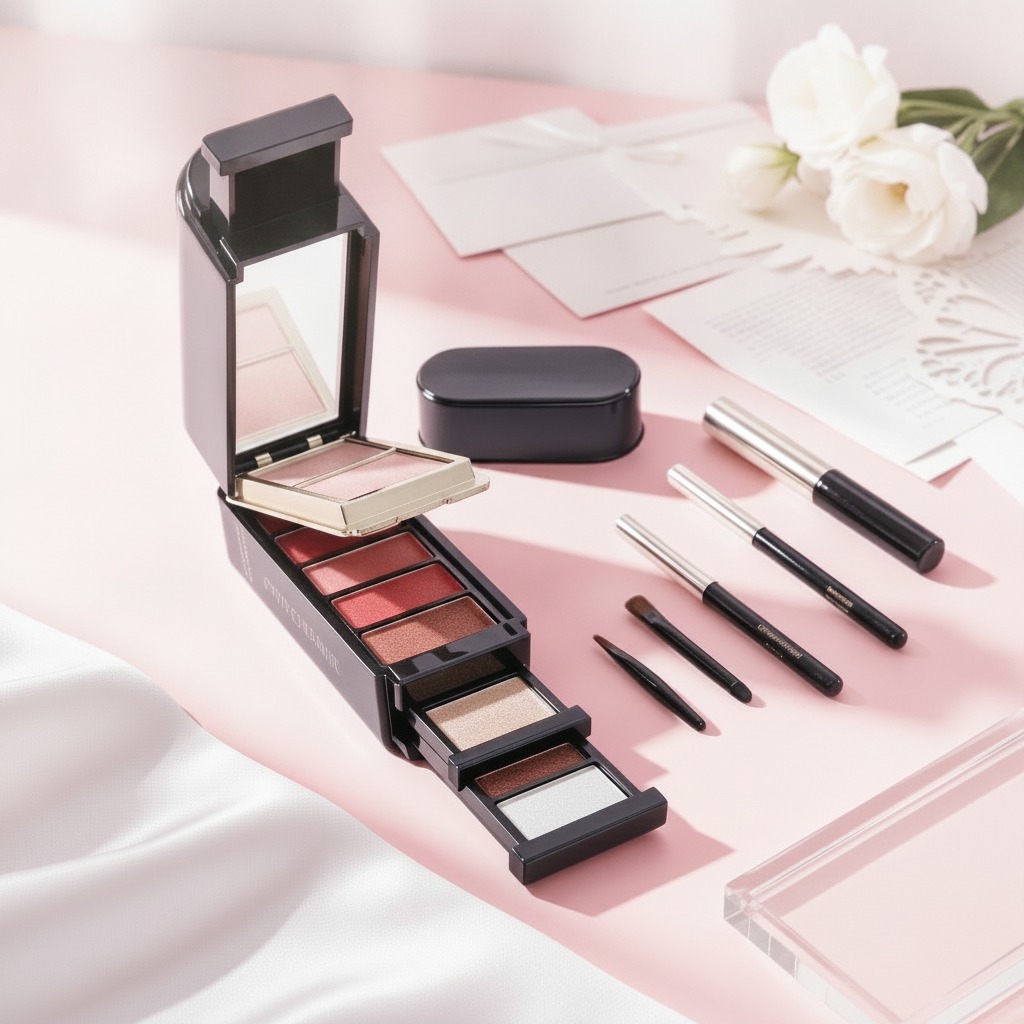
The version described here follows that logic closely. It appears to be a folding cosmetic palette with multiple shade compartments, an integrated mirror, and small applicator tools stored inside the case. The exterior is black with a glossy or semi-gloss finish, and the interior uses a layered or slide-out layout that makes the most of a small footprint. For sourcing teams, that combination is more than a pretty presentation. It is a packaging decision with direct implications for usability, shelf appeal, and shipping efficiency.
What buyers can judge from the format alone
Without making claims about formula or exact materials, the structure already tells you a lot. The case is compact enough for a carry-on bag, cosmetic pouch, or retail gift set. The palette format suggests a multi-shade assortment, likely designed for blending or creating different looks from one compact unit. The built-in mirror makes the kit more practical than a simple refill tray. And the folded, stacked layout helps protect the product while still presenting several colors in a clean, organized way.
That matters because buyers do not just purchase cosmetics; they purchase convenience, presentation, and reduced friction. A kit like this is easier to display, easier to store, and easier for the end user to understand at first touch. In a crowded beauty aisle, that clarity counts.
Likely manufacturing path: packaging first, product second
Based on the supplied product information, this kind of item likely sits at the intersection of cosmetic packaging and filling assembly. The outer shell appears to be a molded rigid case or coated compact, while the interior uses several small pans arranged in a tidy row or stacked compartments. In many cosmetic programs, the case and the fill are treated as separate operations: the packaging is formed first, then pigments or pressed powders are placed into the trays, and finally the unit is assembled with mirror, applicators, and closure elements.
That split is important for procurement. If you are sourcing a private-label beauty set, the packaging supplier, fill house, and final assembly workflow may all affect consistency. A compact like this can look straightforward, yet small differences in hinge feel, mirror alignment, pan fit, or lid closure can change the perceived quality quite a bit. Buyers often discover that only after samples arrive, which is usually later than ideal.
What the visible design is good at
Portable organization
The biggest strength is organization. Several color pans in one case mean fewer loose items in a bag and fewer decisions at the vanity. For travel, that is a practical advantage, not a luxury feature.
Mirror and tool access
The integrated mirror supports quick application on the move, while the included applicator tools make the kit more self-contained. If the small tools are indeed part of the set, that improves usability for consumers who want one purchase to cover the basics.
Retail presentation
A layered compact with gold-toned trim and a dark exterior tends to read as polished and giftable. It has a more finished look than a plain tray, which can matter in seasonal promotions or sampler bundles.
Selection criteria that actually matter
When comparing a carry on makeup kit against another compact beauty set, the obvious questions are not always the best ones. Buyers should pay attention to closure security, hinge durability, mirror size, tray stability, and how easy the palette is to open without spilling product. If the compact will be used in handbags or carry-on luggage, the case should feel firm enough to resist light crush pressure. A flimsy lid may look fine in photos and still be a headache in use.
Shade layout is another practical issue. Multiple pans are useful only if the assortment supports real use cases. A mix of pink, coral, brown, and neutral tones can work well for everyday and travel routines, but the exact balance depends on the target customer. Too many similar shades, and the palette becomes decorative rather than useful.
Common mistakes in sourcing compact beauty kits
One mistake is assuming that a small palette is automatically premium. It is not. Premium is often felt in the details: the snap of the closure, the clarity of the mirror, the fit of the pans, and the consistency of the finish. Another common error is overloading the kit with too many shades for the available space, which can make the layout cramped and awkward to use.
It is also easy to overlook packaging resilience. Travel products get tossed into bags, opened in poor lighting, and handled more roughly than counter-display cosmetics. A compact that performs well in a studio test can disappoint in real travel conditions if the interior layout is too delicate.
Practical advice for product teams and sourcing managers
If you are evaluating a similar product for retail or private label, ask for sample units that show the final closure feel and mirror placement, not just the color pans. Check whether the applicator storage is secure enough for transit. Confirm whether the exterior finish holds up under handling, because glossy surfaces can show scuffs quickly. And if the kit is intended for consumer carry-on use, make sure the size and layout reflect everyday packing habits rather than idealized studio styling.
For brand owners, the strongest use case may be a giftable compact that combines everyday color selection with travel convenience. That gives the product a clearer story at retail: one case, multiple shades, built-in mirror, ready for a bag or suitcase. It is a familiar idea, but familiar ideas sell best when the execution is clean.
FAQ
Is this only for eye makeup?
That cannot be confirmed from the provided information. The layout suggests an eye-shadow-style palette or multi-use color compact, but the exact intended use is not verifiable here.
Can it work as a gift item?
Yes, the presentation suggests strong gift potential. The structured case, mirror, and multiple shades make it feel more complete than a single-purpose cosmetic.
What should a buyer verify before ordering?
Confirm the final product type, the number of pans, the closure behavior, the exact material makeup, and whether the applicator tools are included in every unit.
A sensible next step
If you are sourcing a carry on makeup kit for retail, private label, or promotional use, start with the structure rather than the shade story. A compact that opens cleanly, travels well, and presents its colors without fuss will usually outperform a more crowded design. Ask for samples, inspect the packaging under real handling conditions, and make sure the final build matches the way customers actually carry cosmetics, not the way they are photographed on a perfect day.