Why a travel makeup kit matters when space, time, and clutter all fight back
A travel makeup kit looks simple on the surface, but it solves a real packing problem: how to carry enough tools for a normal face without loading a bag with full-size products, loose brushes, and half-used pencils. For engineers, sourcing teams, and product developers, the appeal is not just portability. It is about creating a compact cosmetic set that still covers the core steps of eye, brow, and lip makeup without feeling stripped down.
The product format matters because travelers do not always want a full vanity routine. They need touch-ups on a train, a quick change before dinner, or one kit that a beginner can use without hunting for missing pieces. A well-designed travel makeup kit can reduce decision fatigue and packaging volume at the same time. That is the business case, whether the item is sold as a bundled beauty set or assembled as a retail-ready assortment.
What is in a compact kit like this one
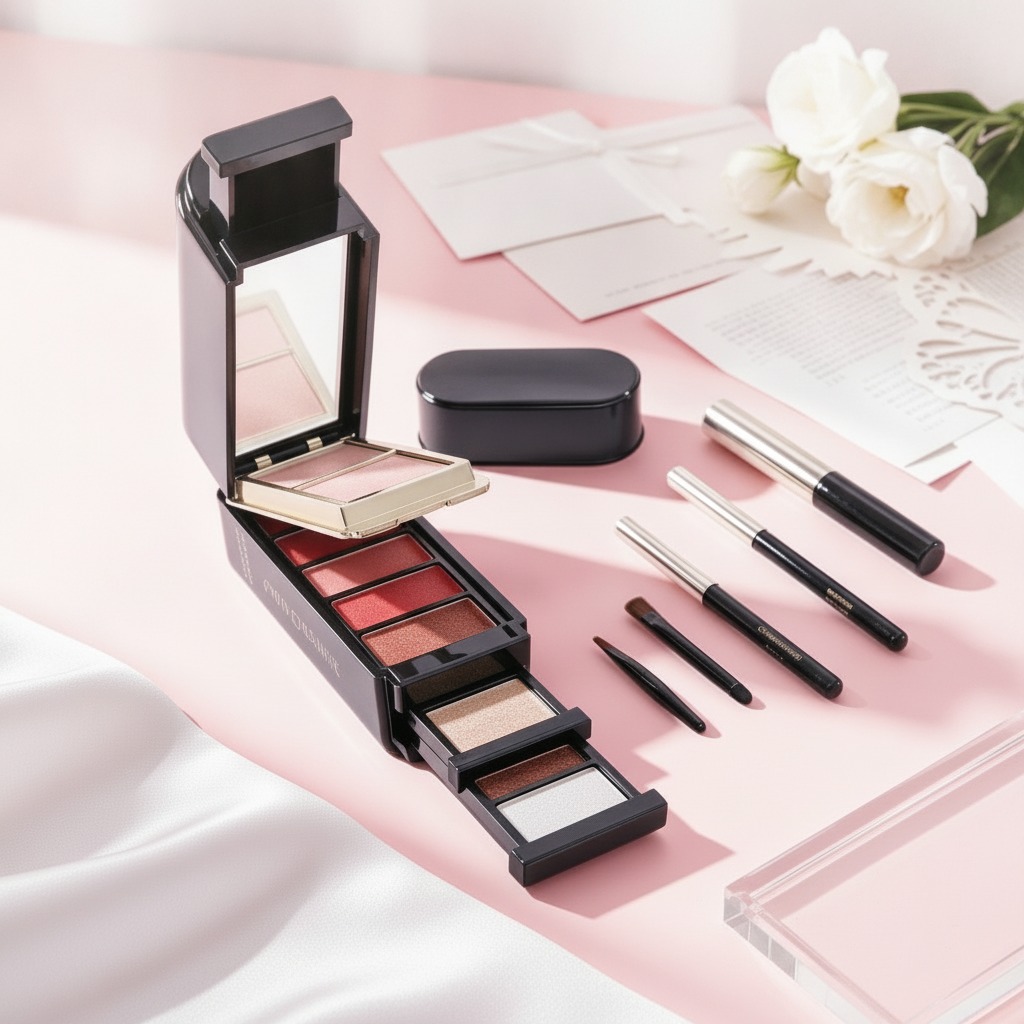
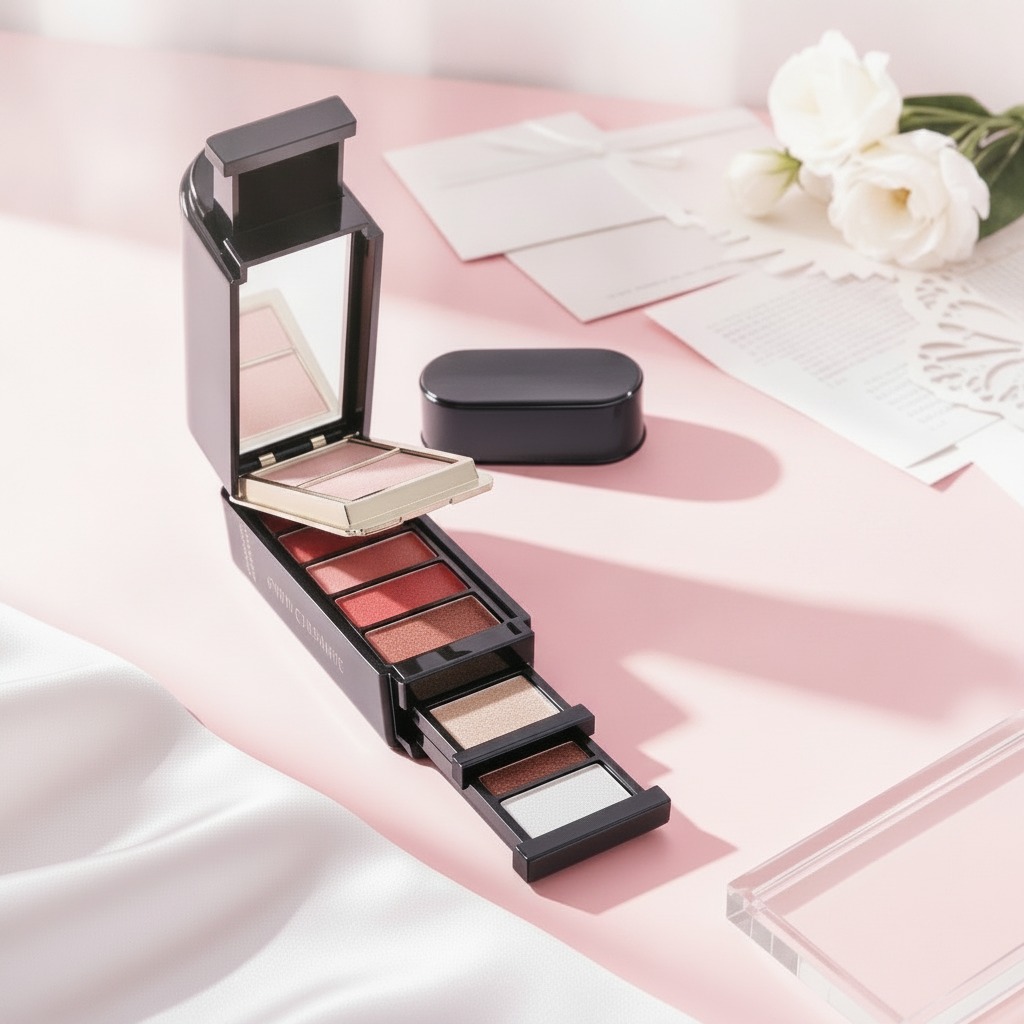
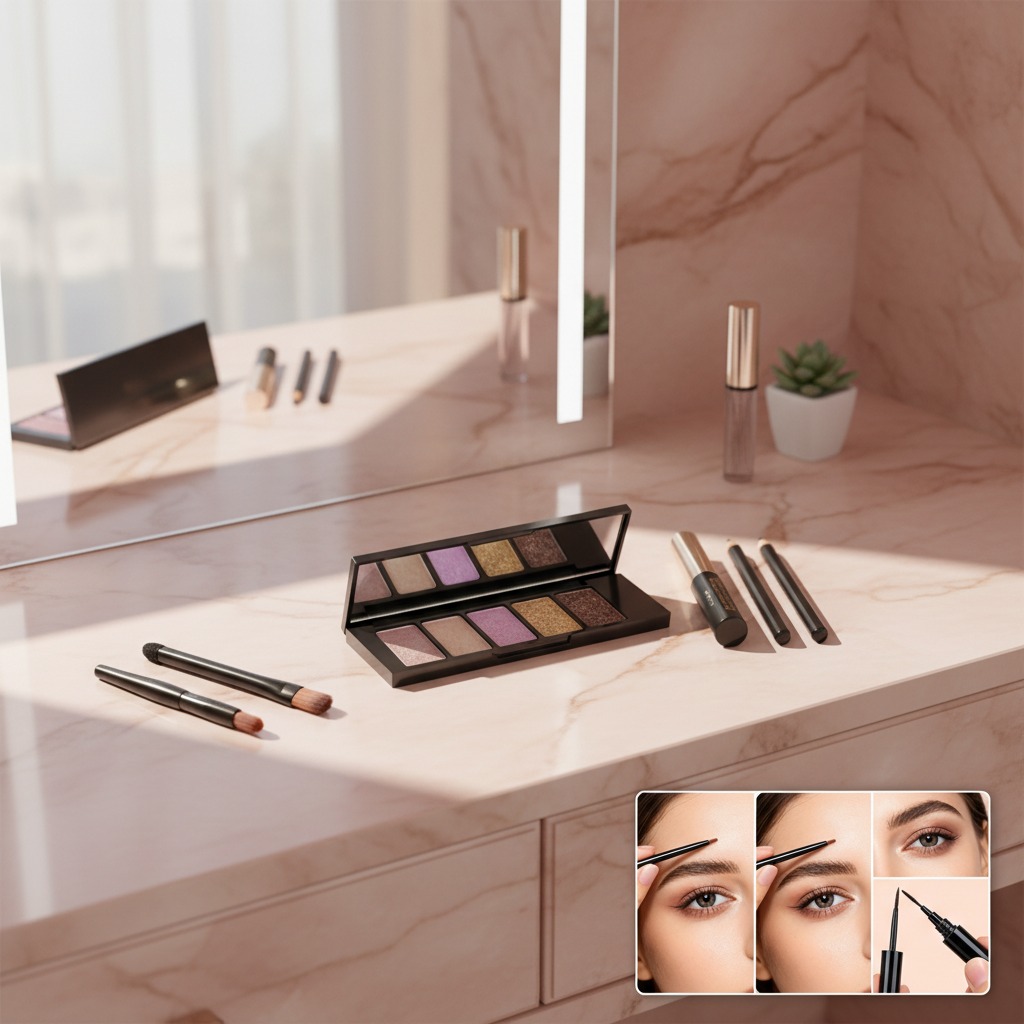
The visible kit components are practical rather than decorative. There is one double-ended eyeshadow brush, one lip brush, one eyebrow pencil, one eyeliner pencil, and a five-color eyeshadow palette. That mix tells you the kit is built around everyday eye and lip application, not a full complexion routine.
The eyeshadow palette uses five pressed powder pans in neutral, mauve, gold, and brown tones. That is a useful range for travel because these shades can handle day-to-night use without requiring a second palette. The brush set is similarly focused: black-handled brushes with dark ferrule sections and brown synthetic-looking bristles, plus a double-ended eye brush with two shapes. In product terms, that is enough variety to apply, blend, define, and detail without overcomplicating the package.
The pencils are slim and dark-bodied, one appearing black and gold. Based on the visible layout, they are likely intended for brow filling and eyeliner work. That is exactly the sort of minimalist configuration many buyers want from a portable cosmetics kit: fewer items, but each one carrying a clear function.
How to evaluate the format before sourcing or buying
For buyers, the first question is not whether the kit looks attractive. It is whether the kit earns its place in a travel bag. A compact makeup set should be easy to open, hard to spill, and intuitive to use. If the palette is too fragile, if the pencils are awkward to cap, or if the brushes shed during normal handling, portability becomes a liability rather than a feature.
There is also a practical manufacturing angle. A bundled kit can involve several production steps: brush assembly, pencil fabrication, and pressed powder compaction or molding for the eyeshadow pans. When those components are packaged together, consistency matters. The case must protect the powders, the pencils need secure caps or ends, and the brush handles should survive repeated packing and unpacking. None of that is glamorous, but it is what separates a useful set from a return problem.
Selection criteria that buyers usually care about
Shade versatility, tool count, and pack size are the obvious filters. Less obvious, but often more important, are brush ergonomics and how well the palette opens and closes in a cramped setting. A travel cosmetic kit can look complete and still be inconvenient if the mirror angle is poor or the brush end is too soft for precise work.
Another caution: do not assume every bundled beauty set is equally suited to beginners and experienced users. A beginner may prefer a straightforward neutral palette and clearly separated applicators. A more advanced user may want better brush shapes or more shade contrast. The same format can serve both groups, but only if the design is intentional.
Common mistakes with portable makeup packaging
One common mistake is overloading the kit with too many small parts. That may improve shelf appeal, but it can make the set feel fussy in use. Another is choosing colors that look dramatic in a display but do not translate well into daily travel use. For a travel makeup kit, practicality tends to outperform novelty.
It is also easy to underthink the closure system. Loose lids, weak hinges, and poor pocket geometry can quickly ruin an otherwise smart product. Buyers should ask how the palette protects powder surfaces and whether the brushes are stored in a way that keeps bristles from deforming.
Who this format is best for
This kind of compact cosmetic set fits everyday commuters, weekend travelers, and first-time makeup users who want a simple all-in-one starting point. It is also a sensible retail option for gift sets and impulse purchases because the value proposition is obvious: five eyeshadow shades, two brushes, and two pencils in one portable package.
For sourcing managers, the question is whether the kit balances utility, cost, and presentation. For product teams, the question is how to keep the package compact without making it feel incomplete. Those are not identical goals, and a good design usually sits somewhere between them.
What to ask before moving forward
Before finalizing a travel makeup kit concept, confirm the visible component list, packaging format, and intended user profile. If the set is aimed at travel and touch-ups, the details should support that use case rather than merely suggest it. Ask whether the palette shades are meant for neutral looks, whether the brushes are designed for general use or specific application steps, and whether the pencils are bundled for eye definition and brow work.
If you are evaluating a supplier, request material and finish details separately. The image may show the structure, but it does not tell you everything about handle composition, bristle type, or powder formula. Those gaps matter, and they should be filled with documentation rather than guesswork.
A sensible next step for buyers
If your goal is a portable makeup solution that feels complete without being bulky, start by comparing the kit’s actual component mix against the makeup tasks your customers need most. For many travel scenarios, this type of set is enough. The key is to verify usability, not just appearance, before you commit to a final design or purchase order.