Why carry-on skincare essentials matter more than most travel kits admit
When people search for carry-on skincare essentials, they are usually not looking for luxury. They are trying to avoid a bad flight, a dry hotel room, or the small panic of opening a bag and finding half their liquids have leaked. That makes this a practical buying decision, not a beauty one. The right compact kit should be easy to pack, easy to inspect at security, and sturdy enough to survive being knocked around in a backpack or overhead bin.
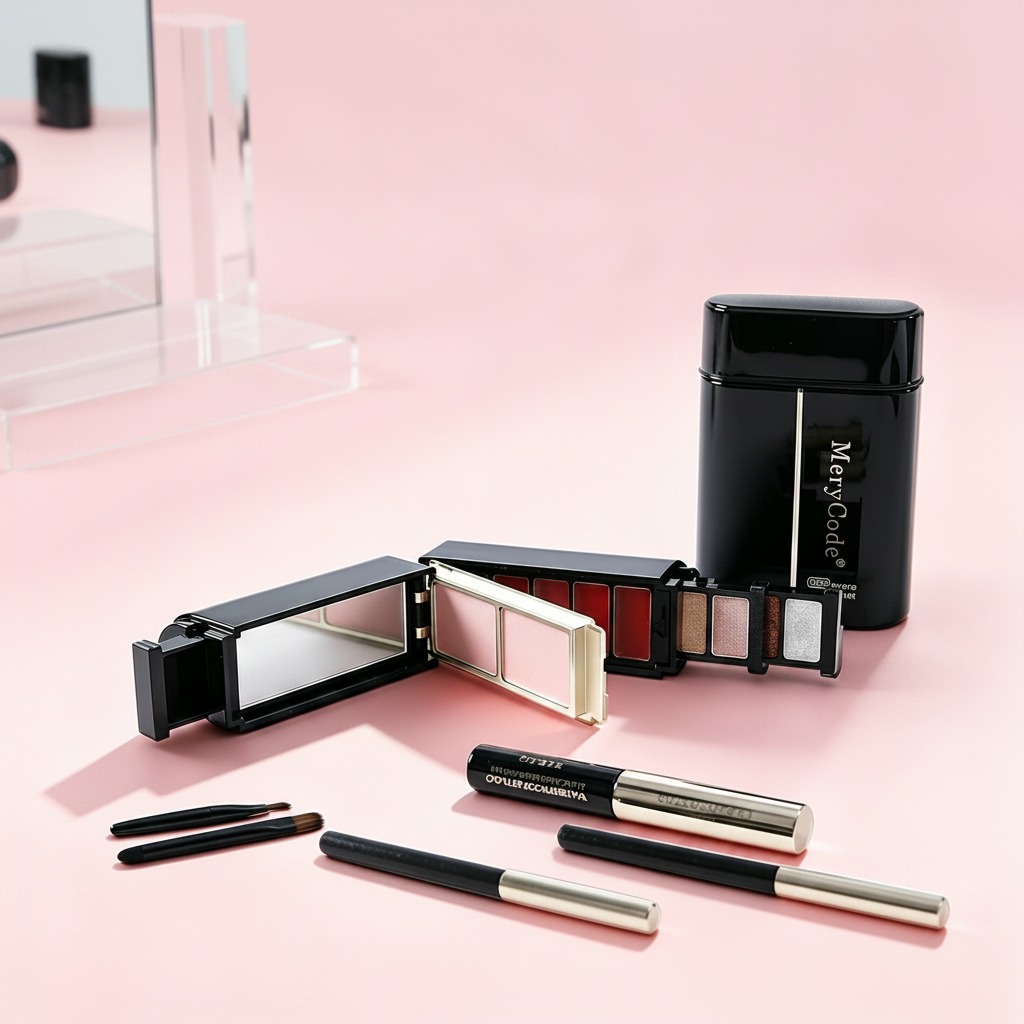
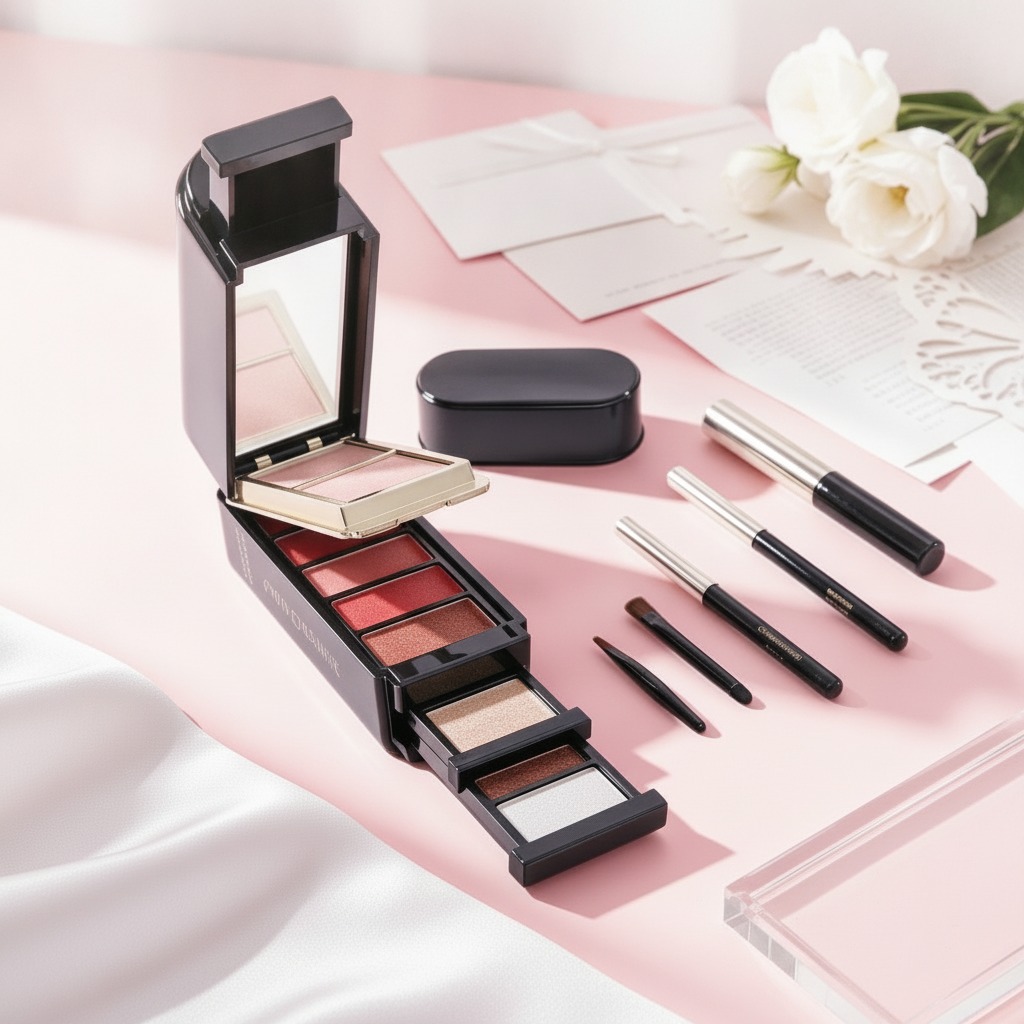
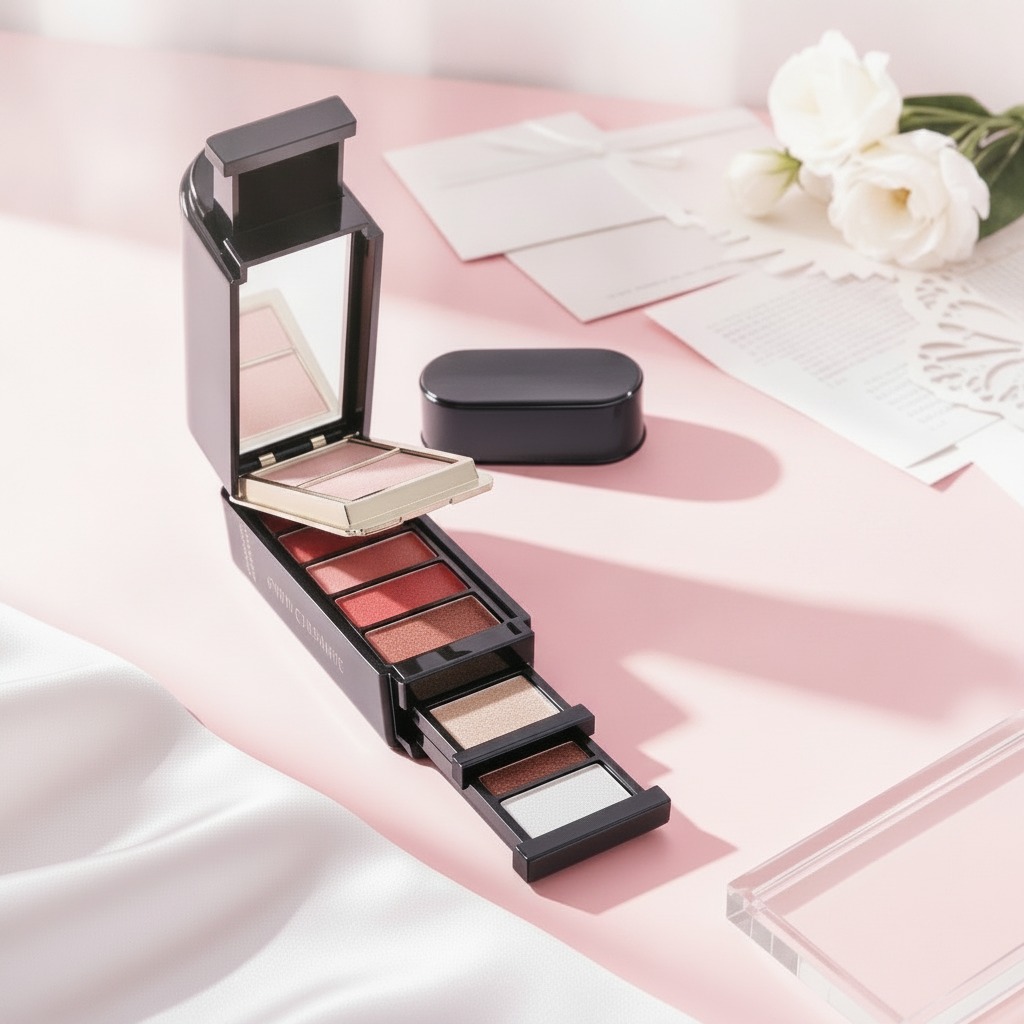
From a manufacturing and sourcing point of view, travel-ready beauty packaging has its own logic. It needs a compact footprint, reliable closures, and materials that can hold product without making the case feel fragile. The product set described here sits in that same zone: a glossy black rectangular carry case, hinged palette units, a built-in mirror, dual-ended applicators, and a black cylindrical tube with printed branding. Whether the contents are used for eyes, lips, or face, the format tells you a lot about the intended buyer—someone who wants a portable all-in-one solution.
What buyers should look for in a travel beauty format
The first thing to judge is not color selection, but structure. Portable cosmetics fail when lids flex, hinges loosen, or closures open inside a bag. A rigid case with snap or hinge-style closure is generally more useful than a decorative shell that looks good on a shelf and not much else. The glossy black finish described here suggests a presentation-friendly package, but gloss also shows scuffs quickly, so retailers and brand owners usually need to think about handling during shipping and merchandising.
Mirror integration is another practical detail. A compact with a built-in mirror saves space and makes quick touch-ups possible without extra accessories. That matters in travel, where users may be standing in an airport restroom, in a car, or in a dim hotel room. The same goes for the included applicators. Dual-ended brushes or tools are not glamorous, yet they do the real work. If a kit is meant to be genuinely portable, the applicators need to be stored cleanly and fit within the footprint of the set.
How modular palette design helps on the road
The visual layout described—one palette with pale pink and neutral pans, another with red, brown, and metallic tones—suggests a modular approach. That is useful because travelers rarely want to carry a full vanity. They want a few coordinated shades, preferably organized so they can build one day look and one evening look without opening three separate boxes.
For private-label brands and packaging teams, this kind of modular layout also helps with product differentiation. A compact set can be assembled around separate shade families, then sold as a gift set, a travel kit, or a professional touch-up palette. But there is a caution here: compact multi-pan packaging can look premium while still being awkward if the wells are too shallow, the product is brittle, or the hinges are not aligned well. Small defects become obvious fast when the consumer is carrying the kit every day.
Materials and finish: useful, but not decorative for their own sake
High-gloss plastic or coated metal-looking cases are common in this category because they balance presentation and portability. They can protect the internal product while still reading as giftable retail packaging. Reflective metallic accents on brush tubes also fit the same logic: the set should look polished, but not so delicate that buyers hesitate to throw it into a weekender bag.
That said, glossy packaging has trade-offs. It tends to show fingerprints and scratches, and a mirror insert can add value only if it is securely seated. Buyers often overlook those details until returns start coming in. For sourcing managers, the lesson is simple: the set may photograph beautifully, but the real test is opening and closing it dozens of times.
Common buyer mistakes with travel-sized beauty kits
One mistake is choosing a compact based only on how many shades it carries. More pans do not automatically mean better usability. In a carry-on context, the right shades are the ones the user can reach quickly and trust under poor lighting. Another common mistake is ignoring the applicators. A palette without decent tools can become dead weight, especially for end users who do not travel with a full brush roll.
Another issue is overpacking the format. If a brand tries to force too much product into a small case, the result can be bulky, fragile, or difficult to close. Travel packaging works best when it respects the limits of the container. That sounds obvious, but it is where many otherwise attractive beauty sets fall short.
Practical advice for sourcing and retail teams
If you are evaluating a private-label cosmetic set like this, ask three questions before anything else: does the closure feel secure, does the layout support quick use, and does the package communicate its purpose without explanation? For travel beauty, those answers matter more than a long feature list. The buyer needs confidence that the kit will behave in transit.
Also, be careful not to assume the product is only for one use case. The described format could serve personal travel, retail gifting, or professional kits for makeup artists. That flexibility is valuable, but it also means the branding and packaging need to be clear enough that the end user immediately understands whether the set is for touch-ups, full looks, or both.
FAQ: what people usually want to know
Is a compact beauty set enough for carry-on travel?
Often yes, if the set is designed around portability and secure closures. A mirror, a few coordinated shades, and included applicators can cover most short-trip needs.
What makes a travel kit feel premium?
Clean packaging, dependable hinges, a clear shade layout, and a finish that looks refined without becoming fragile. Premium should not mean delicate.
Why does modular packaging matter?
It helps organize shades, improves usability, and makes the kit easier to merchandise across different consumer segments.
Next step for buyers
If you are comparing carry-on skincare essentials or adjacent travel beauty kits, look past the color story and inspect the structure. The best compact sets are the ones users can open, use, and close quickly without fuss. That is the difference between a pretty sample and a product people actually pack.