Why a compact like this still matters in beauty packaging
Elegance face cake powder is not just a product name buyers search for; it points to a familiar problem in cosmetics packaging: how to make a face powder or color product feel premium, travel-friendly, and easy to use without turning the package into a fragile accessory. For sourcing managers, product teams, and private-label brands, the compact case is often doing three jobs at once. It must protect the formula, support the brand image, and survive repeated opening, closing, and handling in a handbag or makeup kit.
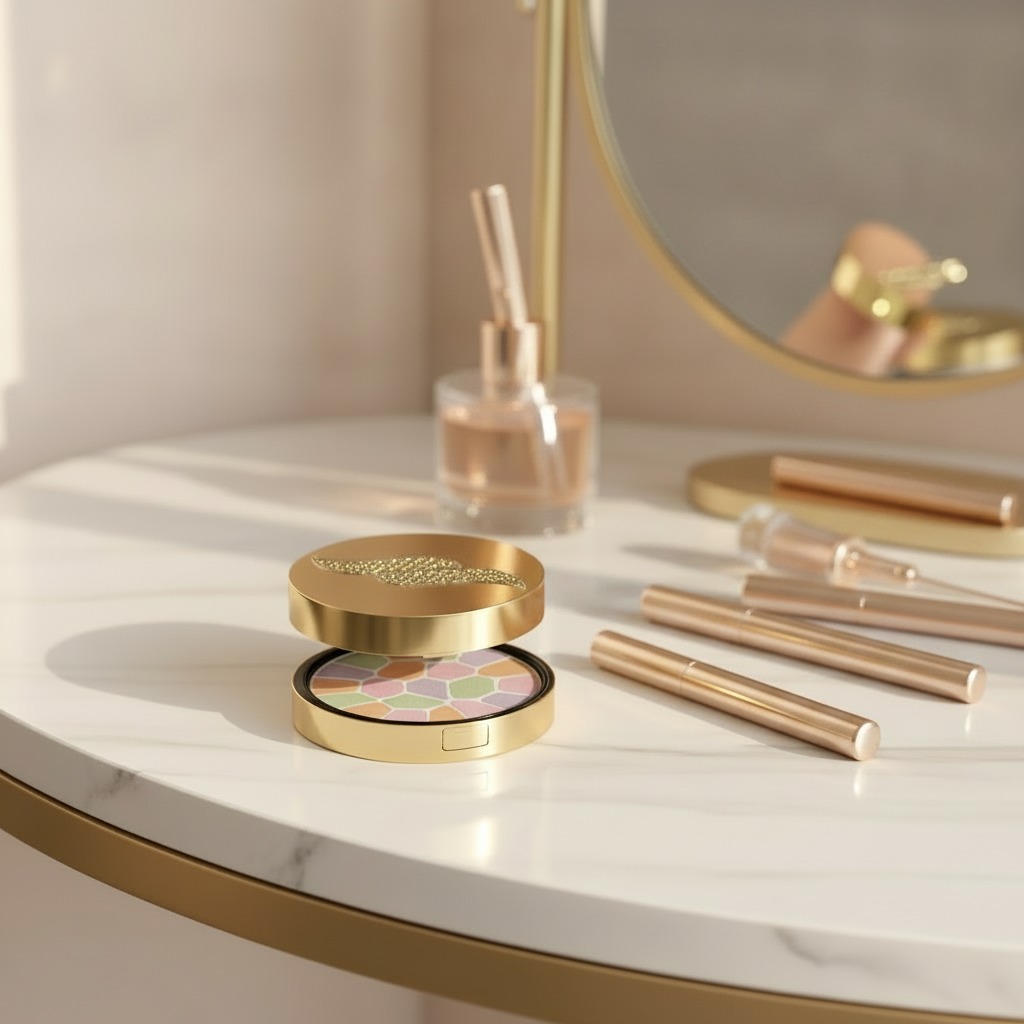
The round compact described here fits that brief well. It has a low-profile metal-looking body, a gold or brass-toned finish, and a decorative lid that does more than simply close the case. That matters because in cosmetics, the package is frequently the first point of judgment. Before a consumer notices texture, coverage, or shade payoff, they notice whether the compact feels sturdy, looks refined, and opens without drama.
What this packaging form suggests to a buyer
The visual cues are easy to read. A polished metallic exterior signals giftability. The raised dotted detail on the lid adds a decorative note without making the piece look cluttered. The secure-looking front closure suggests it is meant for everyday handling, not just shelf display. And the multicolor interior surface points toward a product designed to be seen as well as used, which is common in pressed powders, blush assortments, and face color sets.
That combination is useful for brands selling in retail channels where packaging must do some of the selling before a tester is ever opened. It is also relevant for refillable compact systems, although refillability cannot be assumed from appearance alone. Buyers should confirm that point rather than relying on a visual impression. That is one of those details that gets missed in early sampling and becomes expensive later.
Likely manufacturing route and why it affects the final feel
Based on the visible form, the shell could be produced through metal stamping or deep drawing, then plated or coated to achieve the gold finish. The interior insert appears to be molded plastic or a fitted cosmetic pan. That is not confirmed, but it is a common route for compact packaging because it balances appearance and manufacturability.
For buyers, the process matters because it affects several practical outcomes:
- Surface quality and scratch visibility
- How crisp the lid decoration can look
- Whether the closure feels tight or loose over time
- How well the insert holds the product pan
A compact that looks elegant in a photo can still disappoint in hand if the closure rattles, the finish scuffs too easily, or the lid alignment is inconsistent. Those are small defects, but in beauty packaging they travel fast through customer reviews and retail returns.
Where this style of compact fits in the market
This kind of case is typically suited to premium mass-market cosmetics, boutique color cosmetics, promotional gift sets, and seasonal launches. It is especially relevant when the formula itself is not the only selling point. In other words, the package is helping frame the product as an accessory, not merely a refill.
That can be useful for face powder, blush, or pressed color products, where consumers often carry the compact in a purse and expect the item to look presentable long after the outer carton is discarded. The round profile also makes the package easy to store and visually softer than a hard-edged rectangular case. That may sound minor, but soft forms often read as more cosmetic and less technical.
Selection criteria buyers should not overlook
When evaluating a compact like this, do not stop at the exterior finish. The real questions are functional.
Closure feel and consistency
The latch or snap area should close reliably without requiring excessive force. If the closure feels flimsy in samples, it is unlikely to improve in volume production.
Compatibility with the formula
Pressed powders, blushes, and similar products may have different sensitivity to compression, surface contact, and pan fit. The packaging should match the product behavior, not just the brand concept.
Decoration versus durability
Raised patterns, metallic coatings, and polished finishes can elevate shelf appeal, but they also need to hold up to handling. Buyers should ask how the decoration will age under abrasion, transit, and repeated consumer use.
Internal layout
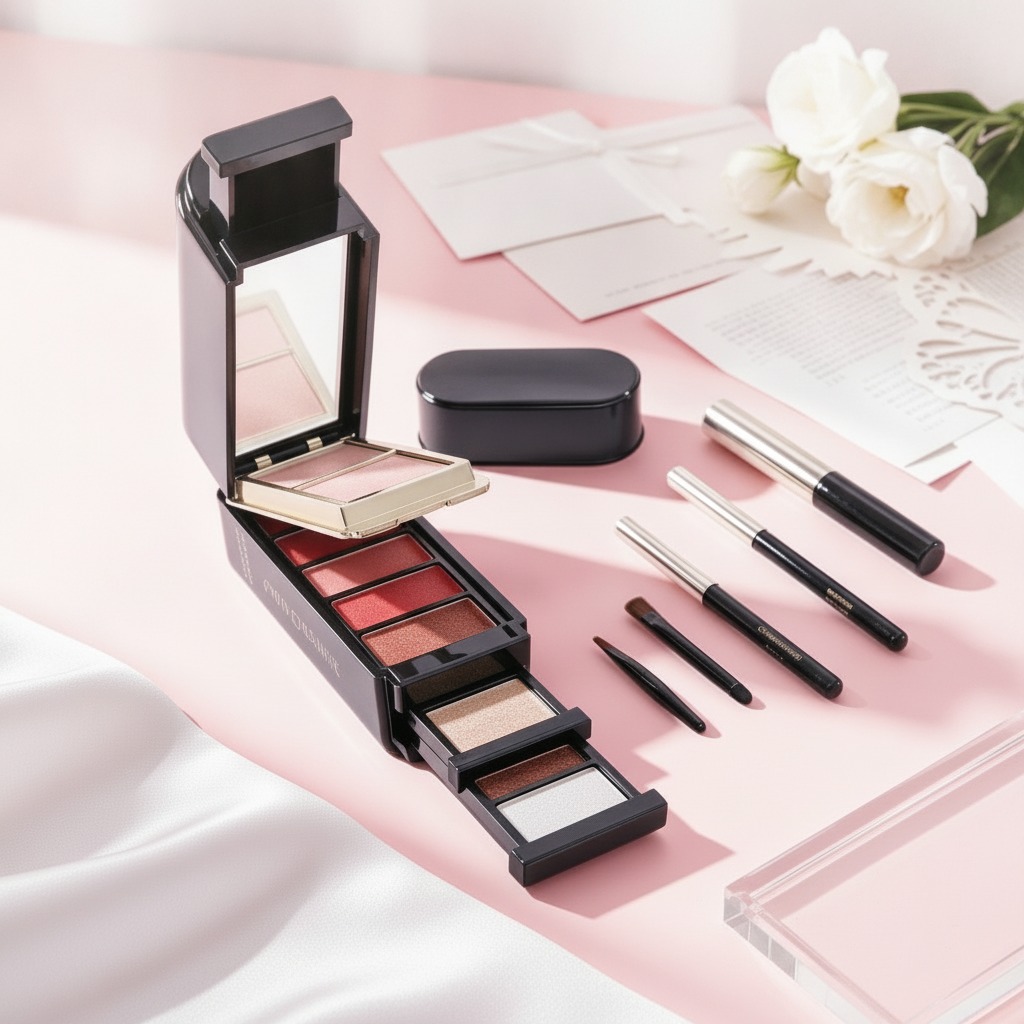
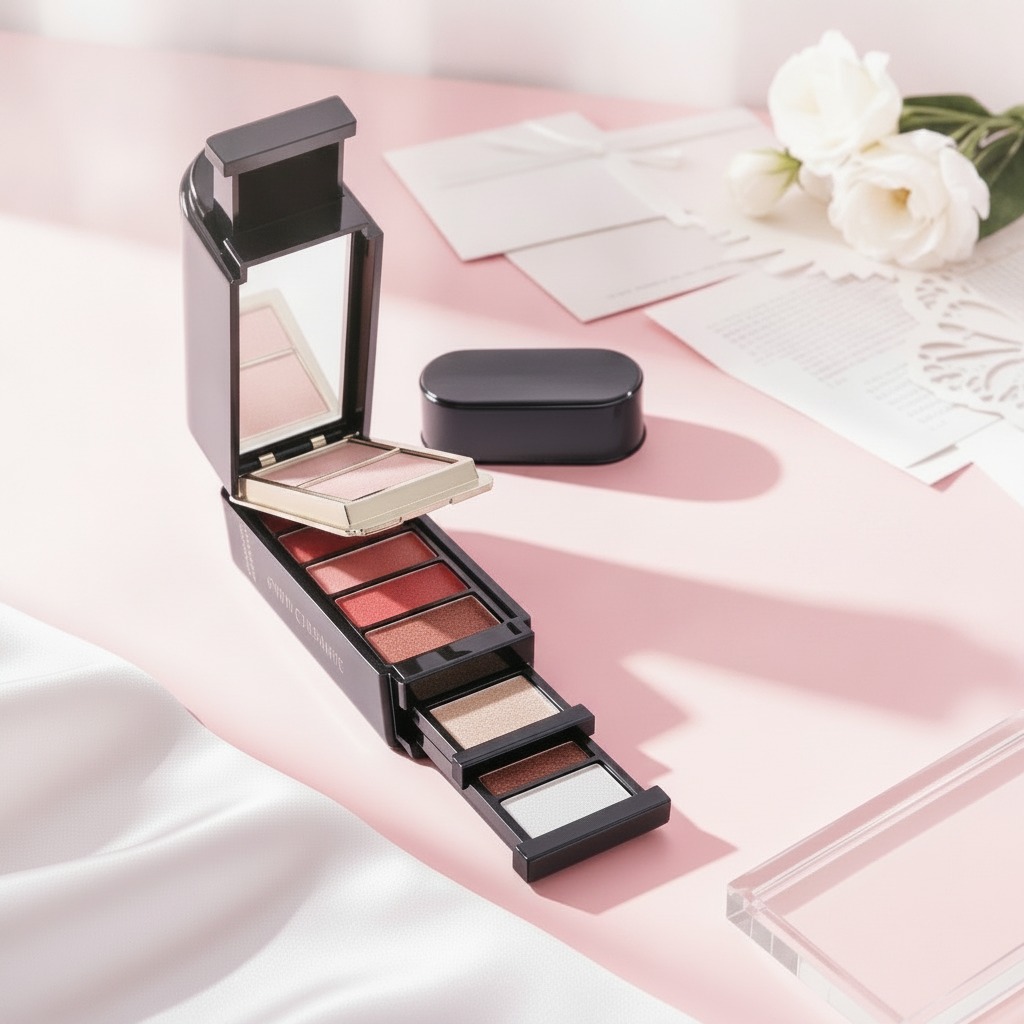
The inner insert must support the intended product arrangement. A multicolor palette surface may look attractive in imagery, yet the actual user experience depends on how the colors are separated, protected, and accessed.
Common mistakes when sourcing compact cosmetic packaging
One common mistake is treating appearance as proof of performance. Another is assuming a decorative compact automatically supports refill programs or multiple product formats. It may, but that has to be verified.
Buyers also sometimes overlook the gap between shelf appearance and daily use. A package can photograph beautifully and still be awkward if the opening angle is poor or the interior pan is hard to access. For personal care products, these small frustrations affect repeat purchase more than teams expect.
Practical buyer advice before you place an order
Ask for samples and check them in realistic conditions: in hand, in a bag, under light scratches, and after repeated opening and closing. If you are developing a face powder or a color palette, confirm how the pan sits in the case and whether the decoration leaves enough space for labeling, mirrors, or applicators if those are part of the design.
If the product will be sold as a premium item, the finish and closure should be evaluated together. A nice lid on a weak base is still a weak package.
FAQ for sourcing teams
Is this compact automatically refillable?
No. Refillability cannot be assumed from the visual description alone. It depends on the internal structure and how the pan is retained.
Can it be used for products other than face powder?
Likely yes, depending on the internal fit and formula compatibility. It may suit eyeshadow, blush, or similar pressed cosmetic products.
What should be confirmed during sampling?
Finish durability, closure performance, insert fit, and whether the final look matches your brand positioning in both retail and online imagery.
Next step
If you are comparing compact packaging options for a premium face product, start with the parts that are hard to fix later: closure, insert fit, surface durability, and how the case feels in hand. The decorative details can sell the idea, but the mechanics decide whether the package earns a place in the line.