What buyers really mean when they search for lip repair oil for chapped lips
People usually do not search for lip repair oil for chapped lips because they want a beauty indulgence. They search because lips feel tight, flaky, or sore, and they want something that can be used quickly, without fuss, and ideally without the heavy, greasy finish some balms leave behind. In cosmetic sourcing terms, that makes the brief fairly specific: a lip care format that can moisturize, soothe the look of dryness, and still feel easy to carry, apply, and sell.
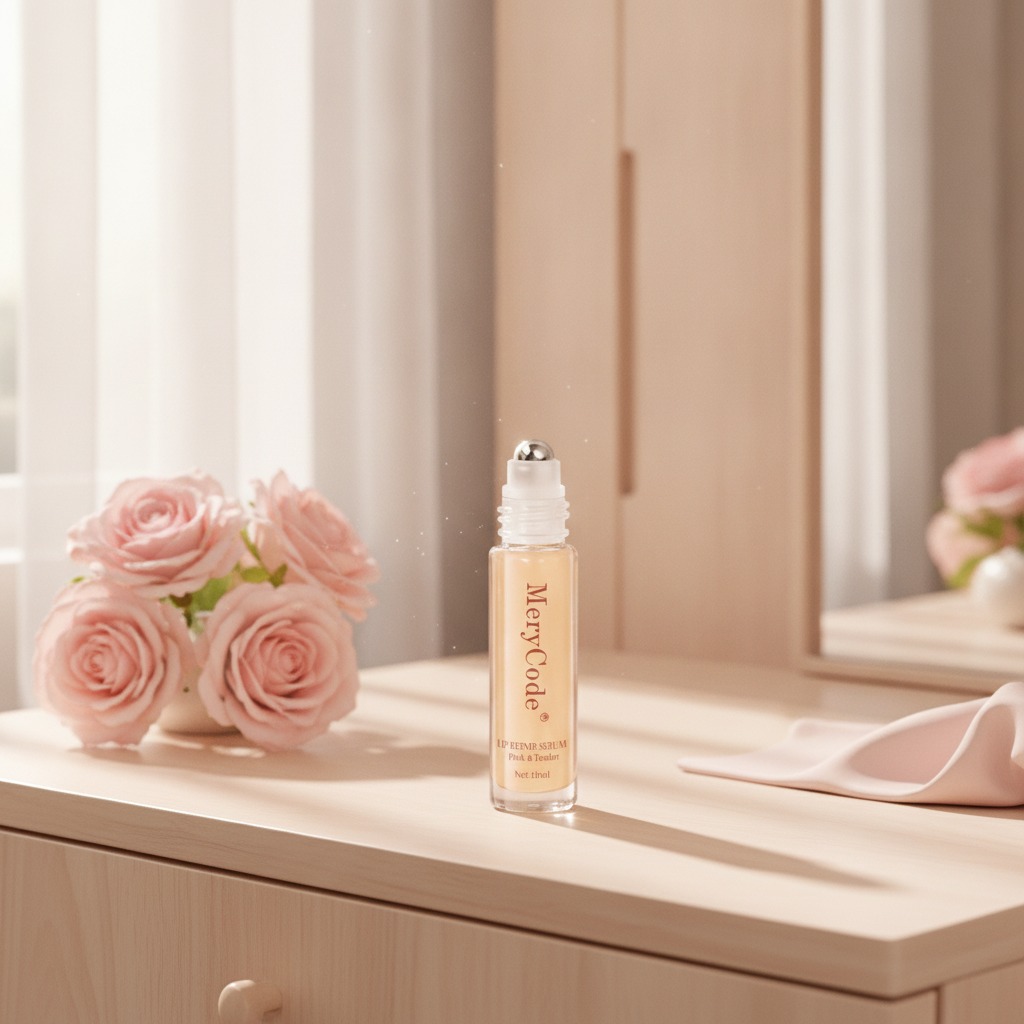
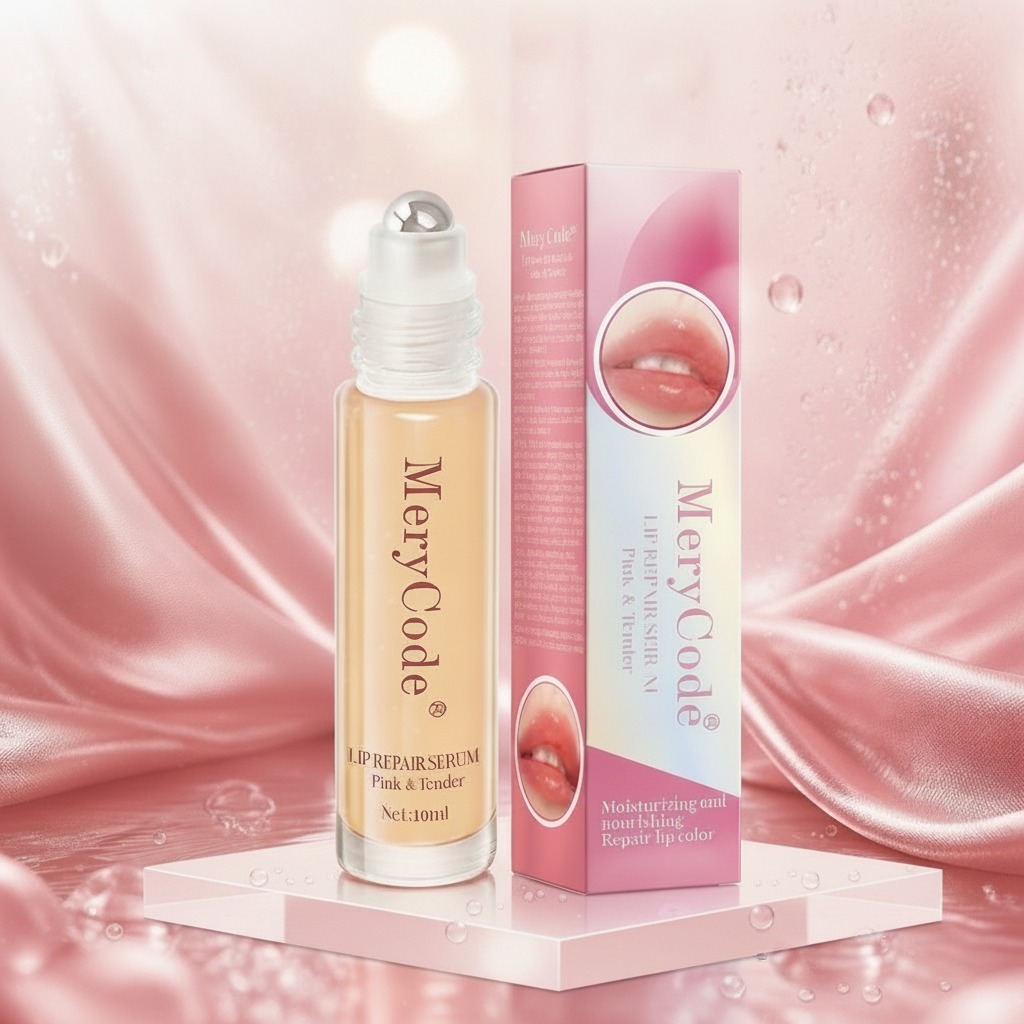
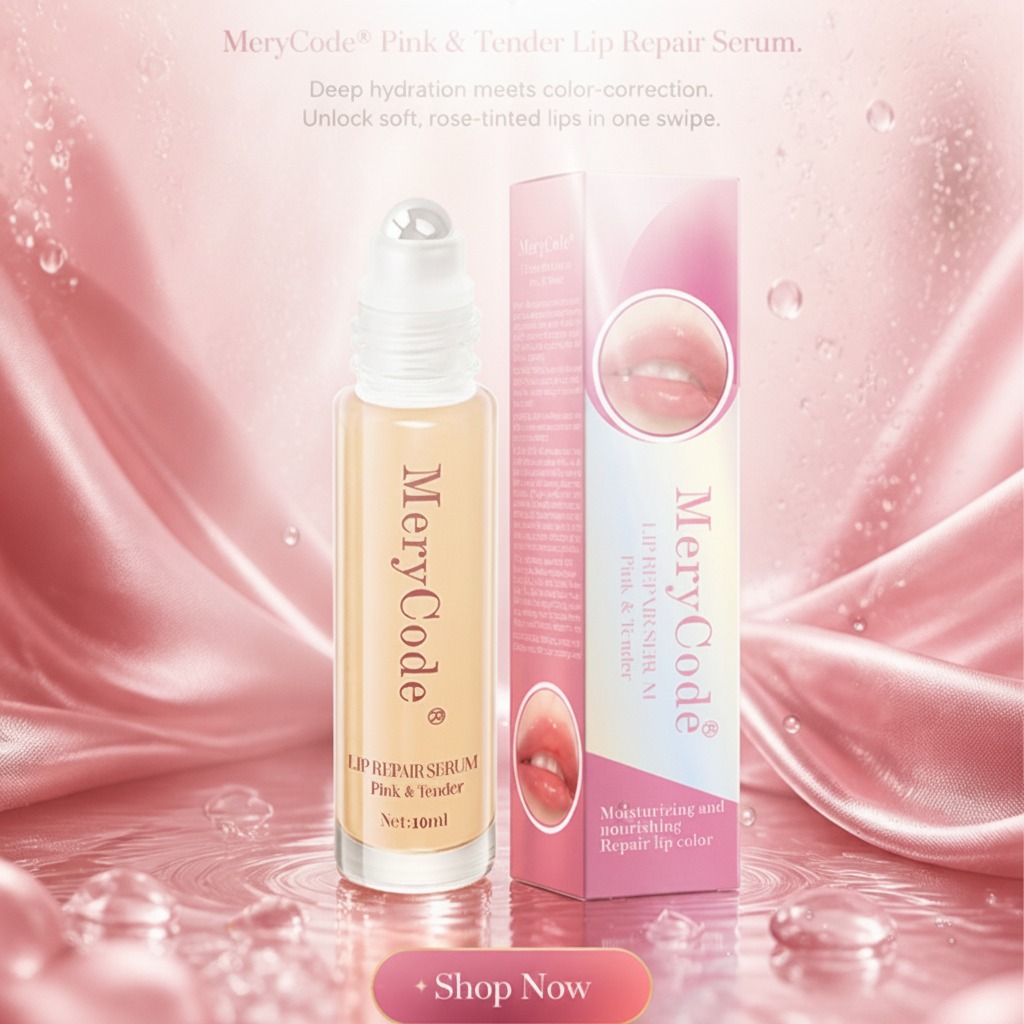
The product you shared fits that brief neatly. It is a compact lip repair serum in a roll-on bottle, with a clear outer body, pale amber liquid, and a white screw cap topped by a rounded roller-ball applicator. The carton is slim, retail-friendly, and visually pitched toward a soft pink finish. On-pack, it is described as “MeryCode Lip Repair Serum Pink & Tender,” with claims such as “Deep hydration meets color-correction,” “Moisturizing and nourishing,” and “Repair lip color.” That combination tells you a lot about the intended market: this is not just a treatment; it is also a cosmetic pickup item.
Why this format matters to sourcing teams and product managers
For engineers and product teams, the key question is not only whether a lip treatment feels pleasant. It is whether the format supports repeat use, clear packaging, and a stable retail presentation. A roll-on serum has a few advantages. It is compact, less messy than a jar, and easy to position for travel, desk use, or handbag carry. The roller applicator also gives the product a more “freshly applied” experience than a squeeze tube, although that same feature means the viscosity and flow need to be carefully matched to the dispensing head.
That is a practical point buyers sometimes overlook. A formula that is too thin can feel runny or uneven. A formula that is too thick may drag across the lips, which defeats the purpose. So the format itself becomes part of the product promise.
Quick comparison: what this kind of lip treatment is trying to do
Hydration
The primary job is to help relieve the look and feel of chapped lips by adding moisture and a smoother finish. In the absence of exact ingredient data, it is safest to describe the effect in cosmetic language rather than assume medical-level repair.
Comfort
Users want less tightness and less visible flaking. A lip repair serum often aims to leave a soft, cushiony layer rather than a waxy shell.
Tint or color correction
This product also carries a pink or rose-toned effect. That matters because many buyers want a treatment that doubles as a subtle lip enhancer, not a clear balm that disappears on contact.
Convenience
The 10 ml size is small enough for carry-on bags, pockets, and retail shelves. In cosmetics, that compactness is not a minor detail; it shapes repeat purchase and merchandising.
How the packaging supports the product story
The visible packaging speaks in a soft, polished retail language: glossy surfaces, a narrow bottle profile, and a color palette that leans pink and white. That combination usually signals a feminine, approachable skincare-cosmetic crossover. The carton extends the shelf presence, while the bottle itself looks designed for fast use. For e-commerce, that is useful because shoppers tend to trust products that appear neat, legible, and easy to understand at a glance.
There is also a practical caution here. Cosmetic packaging that looks elegant must still be functional. Roller-ball systems need reliable sealing, consistent product delivery, and a formula that remains stable in the bottle. If the liquid separates, the visual appeal drops quickly, and customer complaints follow even if the formula itself is acceptable.
What to look for when evaluating a similar product
If you are sourcing or developing a lip repair oil for chapped lips, focus on a few basics first: applicator behavior, product viscosity, visible finish on the lips, and whether the texture feels suitable for daily use. Then check how the claim set aligns with the formula. A “deep hydration” message should not be paired with a drying sensory profile. Likewise, a color-correction story should show a believable tint, not an abrupt lipstick effect.
Also consider the user’s likely routine. Products like this are often applied during the day, so they need to be non-fussy. If the cap loosens, the roller sticks, or the formula feels sticky, the product may still look attractive on a shelf but fail in actual use.
Common buyer mistakes
One common mistake is judging a lip treatment only by its appearance. A pretty carton and a glossy bottle can disguise weak dispensing performance. Another is overpromising repair. In cosmetics, “repair” is often used in a consumer sense, not as a clinical promise, so the wording should stay consistent with the formula’s real behavior.
A third mistake is ignoring shade payoff. A pink tint can broaden appeal, but if the tint is too strong it may narrow the audience. For many users, the sweet spot is a soft correction that makes lips look healthier, not obviously colored.
FAQ for practical buying decisions
Is a lip repair serum different from a lip balm?
Usually, yes. A serum tends to suggest a lighter, more treatment-led texture, while a balm often implies a waxier protective layer. The exact line is blurry in cosmetics, but the user expectation is different.
Why use a roller-ball applicator?
It gives a controlled application and a more premium, travel-friendly feel. It can also make the product look cleaner and more modern on shelf.
Does the tint matter if the main job is moisture?
For many retail customers, absolutely. A soft tint helps the product feel like both care and makeup, which can increase daily use.
A sensible next step for buyers
If you are comparing lip treatment formats, ask for the exact formula details, packaging test expectations, and the intended sensory profile before you commit to a run. With products like this, the formula and the applicator are inseparable. A good concept on paper can still underperform if the roll-on does not deliver smoothly or if the finish looks uneven.
For brands and sourcing teams, the real decision is simple: do you want a basic balm, or a compact lip repair oil for chapped lips that also behaves like a cosmetic accessory? This product sits firmly in the second camp, and that is where its commercial appeal seems strongest.