MeryCode UI sits in a familiar spot in the beauty-tool aisle: right between a simple lash comb and a more specialized lash styling wand. For anyone who has tried to separate clumped mascara, lift stubborn straight lashes, or finish a lash set without leaving a harsh line, the appeal is immediate. The problem is not hard to understand. Lashes look better when they are separated, lifted, and shaped with control. The hard part is finding a tool that gives that control without feeling awkward in the hand or fussy at the lash line.
That is why the design details matter more than the marketing phrase. A tool described for professional lash lifting has to do a few things at once: reach close to the eye, move with precision, and stay comfortable enough for repeated use. If a buyer is choosing equipment for a salon, a makeup kit, or retail resale, the real decision is less about appearance and more about whether the shape supports clean work in a small, sensitive area.
What the design suggests at a glance
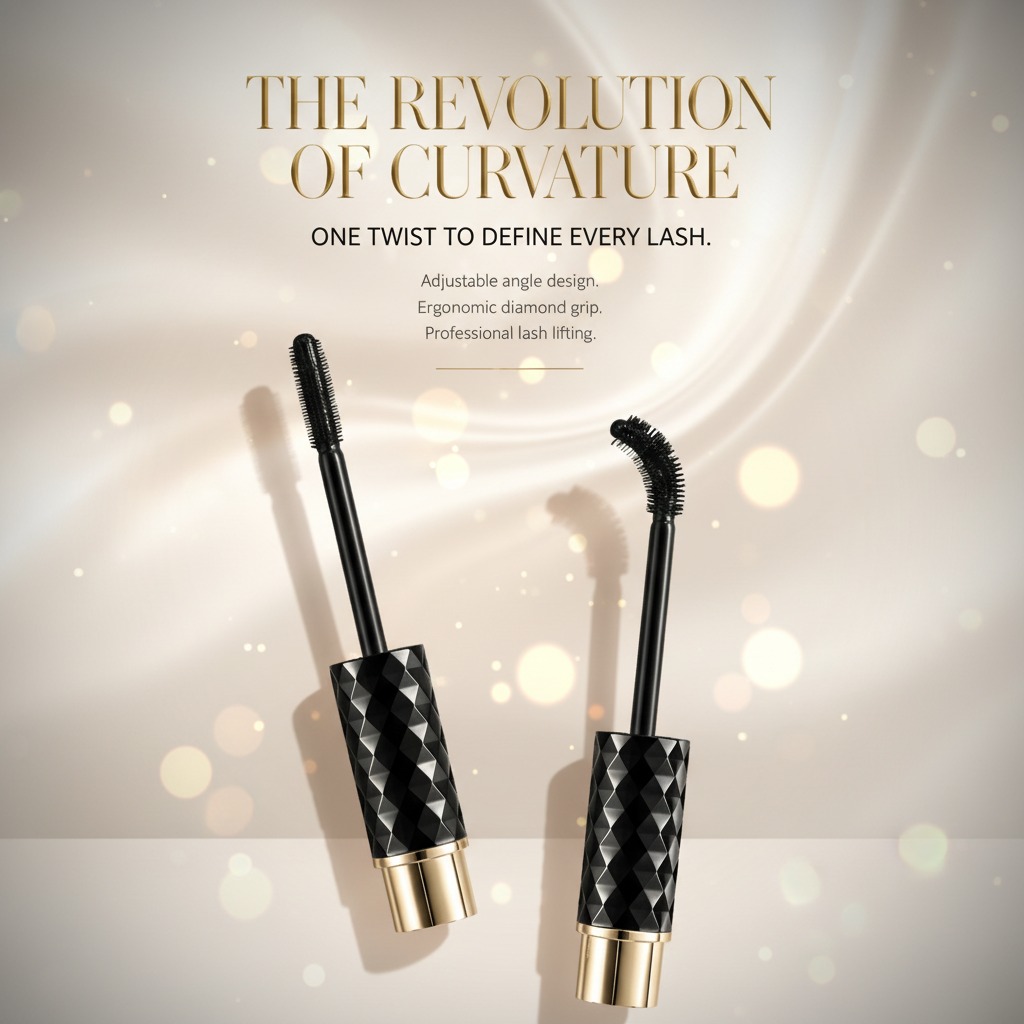
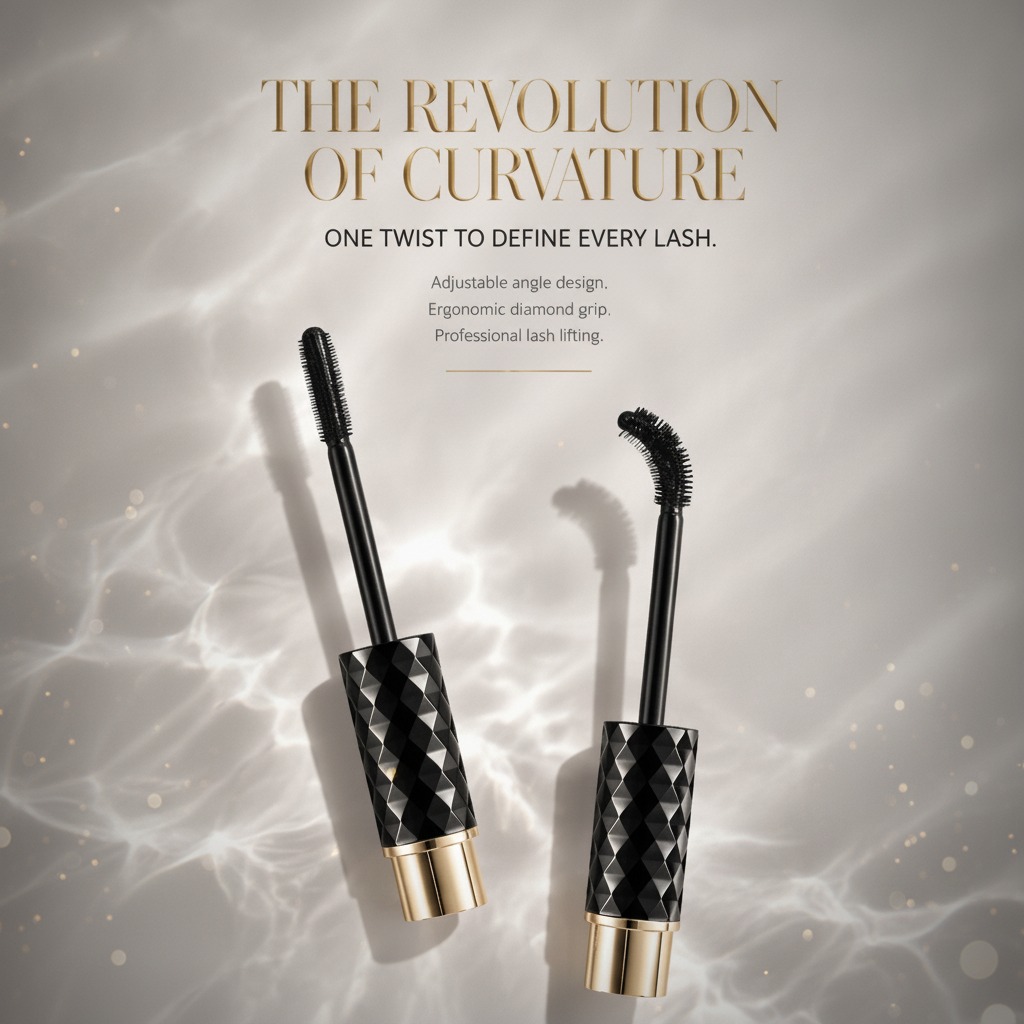
The visible structure points to a wand-style lash tool with a long slim handle, a faceted grip section, and a black brush head that appears curved on one version and straighter on another. The gold-colored base adds a finished, cosmetic-product feel. That combination is common in beauty tools because it balances function and presentation. A consumer sees a polished object; a technician sees a tool that should be easy to hold, easy to direct, and easy to keep under control during a delicate pass through the lashes.
Grip matters more than it sounds
The diamond-patterned grip is not a cosmetic extra. On a tool this small, a textured handle can make the difference between a steady touch and a skittering movement near the eye. In practical terms, that matters when the hand is slightly damp, the workspace is moving fast, or the user is switching between separating, lifting, and defining in a single session. It also makes the product more approachable for consumers who may not have salon-level technique.
The brush head does the visible work
The dense short bristles and curved profile suggest a focus on lash separation and lift rather than broad sweeping. That is useful for straight lashes that need direction, or for cleaning up the finish after mascara. A curved head can help follow the eye contour, while a straighter head may feel more familiar to users who are used to conventional mascara wands. For buyers, that difference is worth noticing, because the head shape often determines whether the tool feels precise or merely decorative.
Why the adjustable angle is the key selling point
The adjustable angle design is the part most likely to influence buyer interest. In beauty tools, a fixed head can work well if the angle suits the user, but a configurable head usually widens the product’s appeal. It gives more room to adapt the approach to different eye shapes, different lash lengths, and different working styles. For a professional, that flexibility can save time. For a consumer, it can reduce the awkward learning curve that often comes with lash tools.
Still, one practical caution: adjustable does not automatically mean better. Buyers should ask how the mechanism feels in hand, whether it holds position securely, and whether the adjustment introduces looseness over time. Those are ordinary concerns, not deal-breakers, but they matter in a tool meant for close facial work.
Where it fits in a lash workflow
This kind of applicator belongs in the final shaping stage. It can be used to lift straight lashes before makeup sets, separate lashes after mascara, or refine a lash styling finish when the goal is a cleaner, more defined look. In a salon setting, a tool like this may support a polished result without adding much extra time. In a retail context, the story is simpler: it is a compact beauty accessory with a clear use case and an easy-to-understand visual function.
That clarity helps sourcing teams too. A product that clearly reads as a lash lifting or lash defining tool usually needs less explanation at point of sale, but it still needs sensible packaging, accurate labeling, and a design that feels credible when held. Shiny styling alone will not carry the product if the brush head feels flimsy or the grip slips.
What buyers should check before placing an order
First, confirm the mechanism behind the angle adjustment. The available information suggests a twist or rotation-style feature, but the exact structure is not verified here. Second, evaluate the brush density and head shape with real lash fibers if possible, because that is where performance shows up. Third, think about cleaning and daily handling. Even when a tool is intended for consumer beauty use, the surfaces should be easy to manage in a busy routine.
There is also a packaging question that gets overlooked. If the product is meant to feel premium, the handle finish, cap color, and overall silhouette need to hold up together. In cosmetic tooling, a mismatch between visual polish and actual handling quality is easy for a buyer to spot after the first sample pass.
Common mistakes when judging a lash tool
One mistake is treating every lash wand as interchangeable. They are not. Another is focusing only on the head shape and ignoring the grip, which is often what determines whether the tool stays usable through a full makeup routine. A third is assuming a decorative finish proves performance. It does not. Real value comes from the combination of angle control, bristle layout, and hand feel.
A practical buying takeaway
If you are comparing MeryCode UI with other lash styling tools, the question is not whether it looks professional. The better question is whether the design helps users lift, separate, and define lashes without fighting the tool. That is the decision this article should help make. For salons and product teams, the safest path is to request samples, test the adjustment feel, and judge the brush on actual lash behavior rather than on a product photo alone.
For brands and distributors, that is usually where the real answer appears. A good lash tool earns its place quietly, one careful stroke at a time.