Why a travel beauty kit needs to do more than look compact
A travel beauty kit has a simple job on paper: keep makeup organized and usable when you are away from the vanity. In practice, it has to survive bags, movement, temperature swings, and the kind of handling that happens when someone is applying makeup in a hotel room, a car, or an airport lounge. For brands, buyers, and product teams, that means the packaging is doing part of the product’s work. A good compact or palette is not just attractive; it protects the formula, helps the user apply it cleanly, and makes the assortment feel intentional rather than crowded.
That matters because travel cosmetics are judged in a different way from full-size products. The consumer is asking a few practical questions at once: Will it fit in a pouch? Will the pans stay in place? Can I see the shades quickly? Is there a tool included, or will I need to pack one separately? A well-designed portable palette answers those questions before the customer ever opens it.

What the visible format suggests
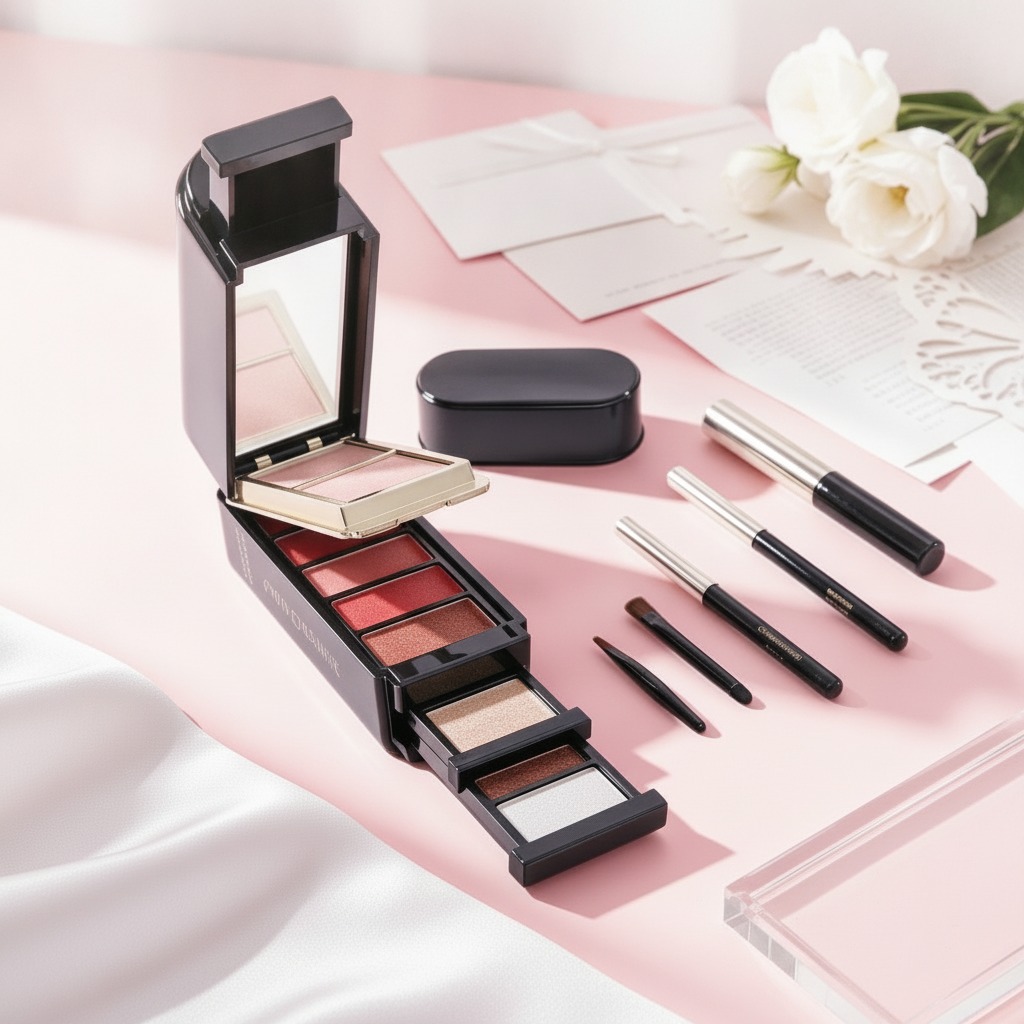
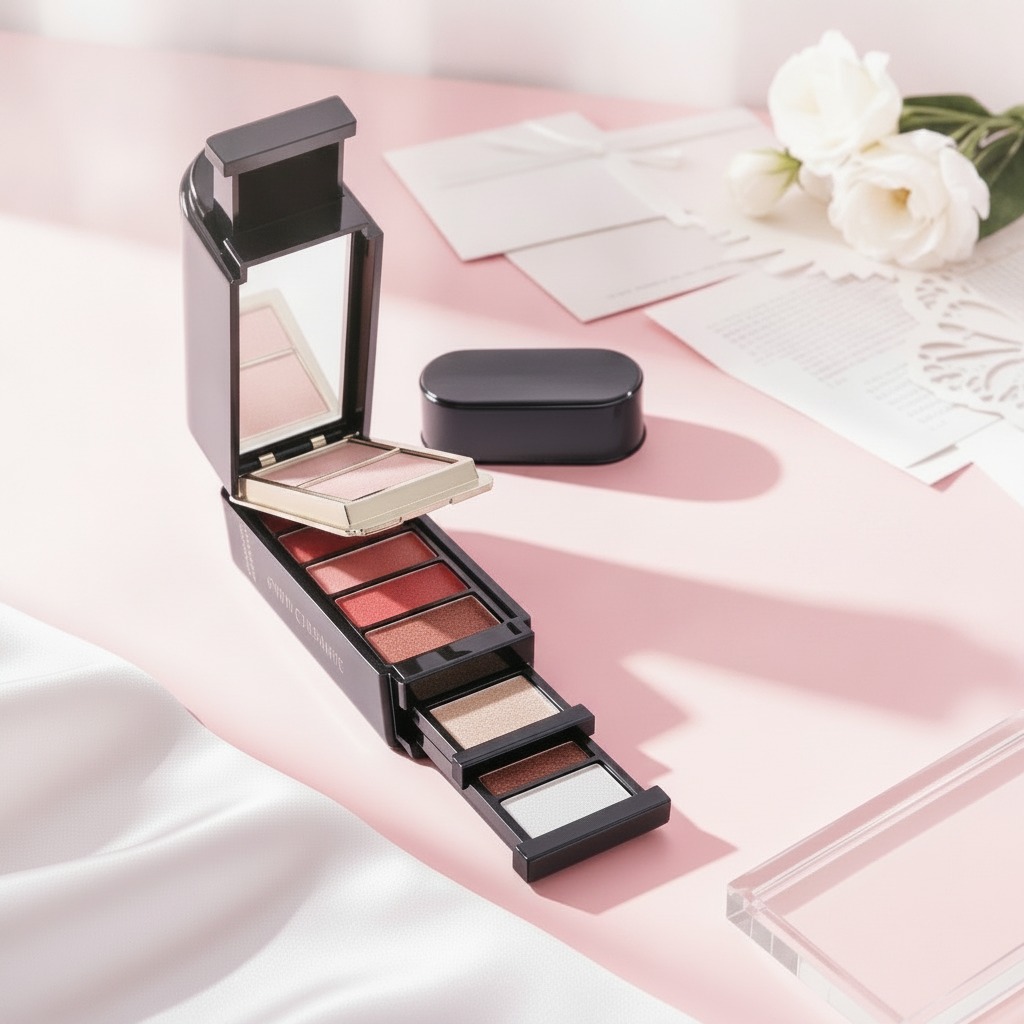
The product format here appears to be a rectangular black compact with a glossy finish, a gold-toned accent line, and printed branding on the front. The open interior shows multiple small color pans and at least one slim applicator area, which points to a makeup palette built for shade selection and on-the-go application. It may be an eye color set or another multi-shade cosmetic assortment; from the image alone, it would be safer not to narrow that down further.
From a packaging standpoint, this is a familiar and sensible structure. Flat-sided rectangular cases stack well in cartons, sit neatly in display trays, and tuck into handbags without wasting space. The dark exterior also gives the product a more premium look, though that only works if the print quality, hinge action, and closing feel are consistent. A glossy black case with a clean gold detail can read as elegant; a sloppy one just reads as generic.
What buyers should evaluate in a travel-format palette
1. Protection during transport
For cosmetics meant to travel, internal stability is crucial. Loose pans, poorly seated inserts, or weak closures can turn a tidy palette into a mess after a few trips. Buyers should look closely at how the pans are held and whether the lid closes with enough confidence to stay shut inside a pouch.
2. Usability in limited space
A travel beauty kit should be easy to use without a large mirror setup or a full tool kit. If the palette includes an applicator, that is useful, but only if the storage slot actually keeps it from rattling around. A compact that saves space but creates a fiddly application experience is not really solving the travel problem.
3. Shade layout and visual clarity
Multiple small wells make sense when the consumer wants variety in one carry-friendly item. The tradeoff is that small pans can be harder to dip into cleanly, especially for users with larger brushes or those who are working quickly. Brands should think about the sequence of shades, contrast between tones, and whether the layout supports blending rather than just assortment.
Manufacturing and packaging considerations
Based on the visible structure, a consumer cosmetic compact like this is often made from injection-molded plastic or a similarly formed housing with decorated exterior surfaces. That kind of build is common because it balances cost, shape control, and visual finish. The key manufacturing issues are less about the outer shell alone and more about how the shell, hinge, insert, and pans are assembled as a system.
Private label and promotional programs often like this format because it can carry branding cleanly while presenting a finished retail look. Still, buyers should be cautious about assuming that a polished exterior guarantees durable performance. The real test is repeated opening, closing, and handling across ordinary travel use.
Common mistakes when sourcing travel cosmetics
One frequent mistake is focusing only on the exterior appearance. A nice-looking palette can still fail if the interior layout is awkward or the applicator is an afterthought. Another is overfilling the compact with too many shades for the available space. The result may look generous on a shelf, but it often becomes cramped in use.
There is also a packaging trap here: making the case too light. Lightweight is useful, but not if the closure feels fragile or the body flexes under pressure. Buyers want portability, not a toy-like shell.
Practical advice for brand and sourcing teams
If you are evaluating a travel beauty kit for retail, private label, or a promotional program, start with the user scenario. Is the customer repacking for a weekend trip, carrying a daily touch-up item, or buying a giftable compact? That answer should guide the size, number of pans, and whether an applicator is included.
It also helps to request samples and test them in the way real users will. Put the compact in a pouch, carry it, open it one-handed, and check whether anything shifts. That simple exercise often reveals more than a spec sheet does. And if the product is intended for premium positioning, pay close attention to print alignment and surface finish, because those small details carry a lot of weight in cosmetic retail.
FAQ
Is a travel beauty kit only for makeup consumers?
No. It can also serve beauty retailers, private label programs, gift sets, and promotional campaigns. The underlying requirement is the same: compact presentation and reliable use.
Should the palette include an applicator?
Often yes, especially for travel use. But an applicator only adds value if it is stored securely and suits the formula it is meant to apply.
What matters most in the case design?
Durability, closure quality, and a layout that makes the shades easy to use. Looks matter, but not as much as the product surviving actual travel.
What to do next
For sourcing teams, the next step is to compare case design, interior layout, and branding execution against the intended use case. If the goal is a portable cosmetic product that feels polished in hand and practical in transit, the packaging should earn its place before the formula even comes into view. That is the real test of a travel beauty kit.