Why a toiletry bag for travel matters more than most people think
A toiletry bag for travel sounds like a simple purchase until you have to pack one for a flight, a client trip, or a week on the road. Then the details start to matter: whether bottles leak, whether small items disappear into one deep pocket, whether the bag opens flat enough to find what you need quickly. For engineers, sourcing managers, and product teams, this is not just a soft-goods accessory. It is a compact storage system with real requirements for layout, materials, closure performance, and user convenience.
That is also why travel organizers now sit at the intersection of consumer goods design and manufacturing discipline. A good bag has to protect contents, hold shape, stay light, and survive repeated stuffing into luggage. A poor one may look fine on a shelf and fail the moment a cap loosens or a zipper snags.
What buyers usually want from a travel organizer
Most purchasing decisions come down to function, not style. The bag has to make packing easier and reduce mess. That means considering the size of bottles, the number of compartments, the cleanliness of the interior, and how the product opens in daily use. In practical terms, buyers tend to look for a main compartment that can hold full-size or travel-size items, smaller pockets for brushes or tools, and a structure that keeps cosmetics upright when possible.
There is also a crossover between toiletry storage and cosmetic packaging. Many travelers carry not only skincare and hygiene items but also a compact makeup palette, brushes, and other small accessories. A travel-ready makeup kit often needs the same qualities as a toiletry bag: controlled organization, impact protection, and a form factor that sits neatly in luggage.
Packaging formats that solve the same travel problem
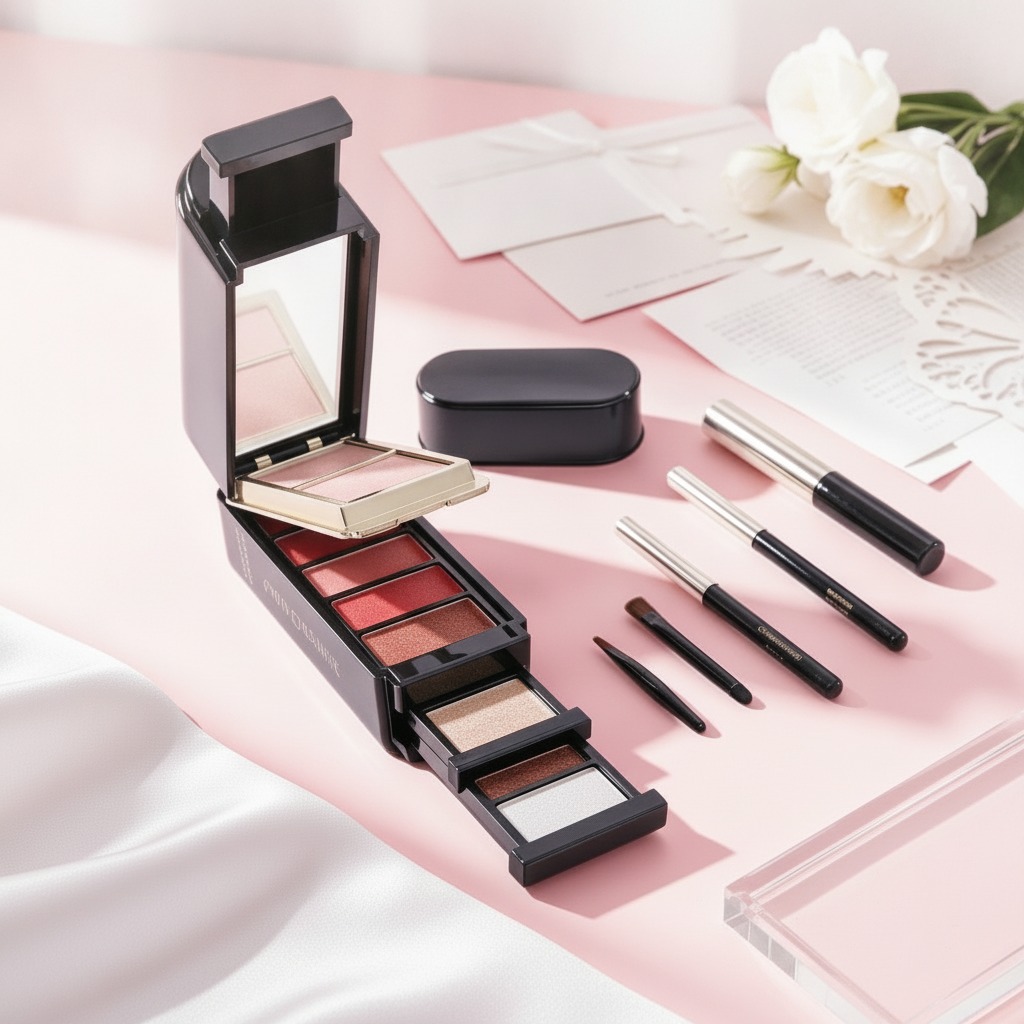
Not every portable beauty item belongs in the same container. A cosmetic compact with a built-in mirror, multiple pressed color pans, and a stacked or slide-out tray arrangement serves a different purpose from a soft toiletry pouch. Still, both are trying to solve the same basic issue: keeping small products available, protected, and easy to access while traveling.
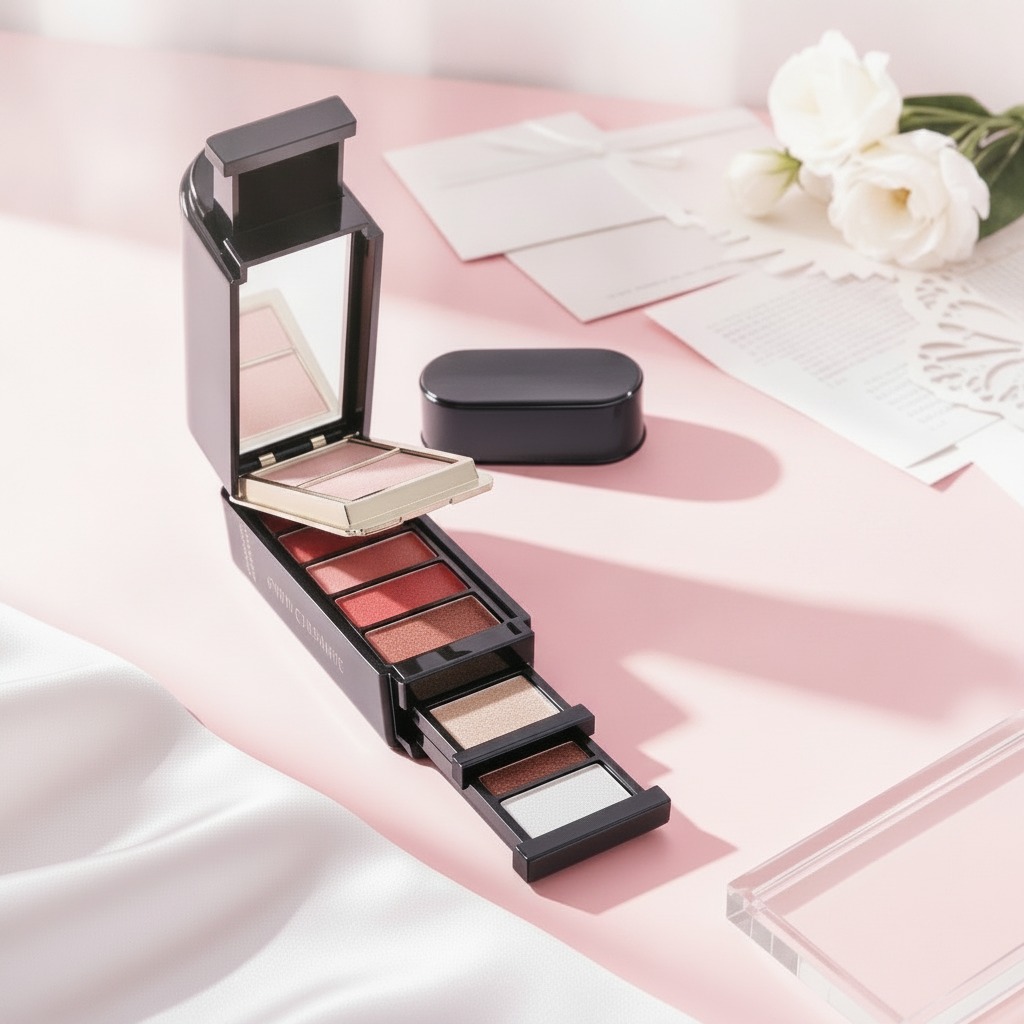
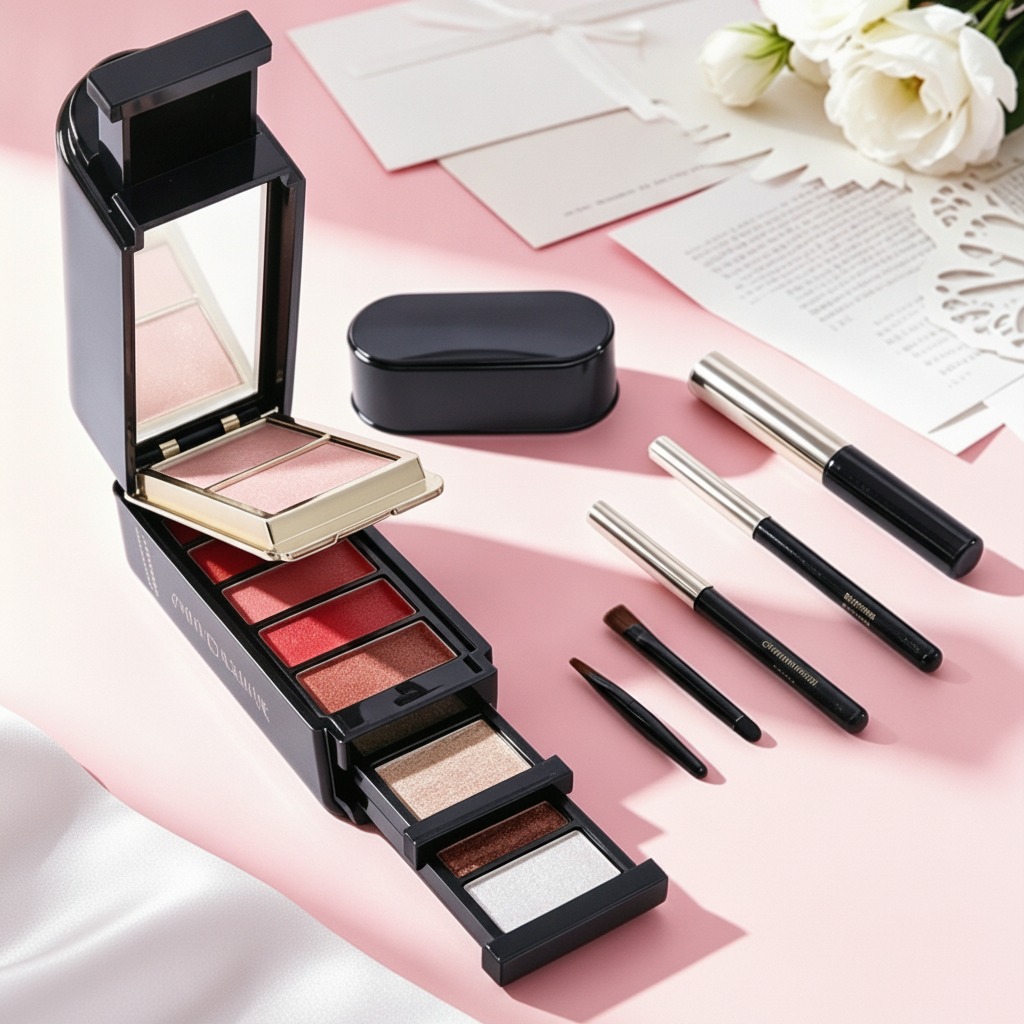
The compact format is especially useful for makeup users who want one item with several shades in a slim case. A glossy outer shell, hinged lid, and integrated mirror reduce the number of loose pieces in a bag. If brushes are included, the system becomes even more self-contained. From a buyer’s standpoint, this kind of compact can reduce clutter and improve presentation for retail sets or gift packaging.
Key material and construction choices
For soft toiletry bags, common priorities include wipe-clean linings, water-resistant fabrics, sturdy stitching, and closures that do not fail under load. For hard cosmetic cases, manufacturers often use molded plastic or coated composite shells, sometimes with a painted or metalized finish for visual appeal. The product structure may include a hinged lid, internal mirror, and layered trays for separate color pans or accessories.
That glossy black compact with a gold-tone interior frame is a good example of how packaging and product design merge. It is compact, visually polished, and practical for travel or counter display. But buyers should be cautious: a nice exterior finish does not automatically mean the hinge, latch, or tray geometry will stand up to repeated use. Those are the parts that deserve checking in samples.
How to evaluate a travel beauty bag or compact before buying
Check what actually needs to fit inside
Start with contents, not dimensions on paper. Bottles, jars, brushes, palettes, and accessories have awkward shapes. A bag that looks roomy may waste space if the layout is poor. A compact palette may be beautiful but too rigid for a larger kit. The real question is whether the product supports the user’s routine without forcing compromise.
Look at access, not just capacity
If a toiletry bag opens too narrowly, the user spends more time digging than packing. If a makeup compact uses stacked trays, the trays should open in a logical order and stay stable when handled on the move. This is where design affects satisfaction more than size alone.
Watch for the usual weak points
Zippers, corners, seams, and internal attachments are common failure areas for travel bags. In cosmetic compacts, the weak points are usually hinges, mirror bonding, pan retention, and tray alignment. A buyer should ask for sample handling, not just product photos. Small issues often show up early in use and are expensive to ignore later.
Common mistakes in sourcing travel storage products
One mistake is buying for appearance only. Another is over-specifying the container and under-specifying the user workflow. A bag with too many pockets can become cumbersome. A compact with too many layers can feel fussy. There is a practical middle ground, and the right choice depends on whether the end user is a frequent flyer, a casual weekend traveler, or a professional makeup artist who needs fast access and a tidy setup.
Another overlooked point is presentation. Retail buyers often need products that look clean on shelf and photograph well online. That is where a neat case shape, visible mirror, and organized color layout can help. The product should not just work; it should communicate order at a glance.
Practical buyer advice
If you are sourcing a toiletry bag for travel, ask whether the design protects liquids, separates wet from dry items, and stays easy to clean. If you are sourcing a cosmetic compact for travel kits, ask whether the case is slim enough for luggage, whether the mirror is useful in real lighting, and whether the brush set or accessory compartment adds value without crowding the layout.
For mixed beauty kits, it can make sense to pair a soft toiletry organizer with a rigid makeup palette or compact. The soft bag handles bottles and tubes; the hard compact handles pressed powders and color products. That combination is often more reliable than trying to force everything into one type of container.
FAQ: quick questions buyers tend to ask
Is a toiletry bag the same as a cosmetic bag?
Not always. They overlap, but toiletry bags usually prioritize bottles and hygiene items, while cosmetic bags focus more on makeup tools, palettes, and small accessories.
Do hard cases travel better than soft pouches?
For fragile cosmetic products, often yes. For bulky liquids or mixed toiletries, a soft pouch may be more flexible.
What matters most in a travel compact?
Organization, protection, and easy access. A mirror and secure tray layout are usually more useful than decorative features.
What to request from suppliers next
Before you place an order, ask for a sample set that reflects actual use: filled bottles, brushes, compact makeup items, and the kind of accessories travelers really carry. That is the quickest way to see whether the design works or merely looks good in photos. For compact cosmetic packaging in particular, the details of tray movement, closure feel, and internal fit deserve attention. Those are the small decisions that determine whether a product feels convenient every day or ends up forgotten in a drawer.