Why lengthening mascara lives or dies by the wand
When buyers talk about lengthening mascara, they usually focus on the formula first. That is a mistake. In retail beauty, the wand often does as much of the visible work as the chemistry inside the tube. A well-shaped applicator can pull product through the lash line, separate clumps, and help the user reach short inner-corner hairs that would otherwise disappear. A poorly chosen one can make even a decent formula look average on shelf and frustrating in use.
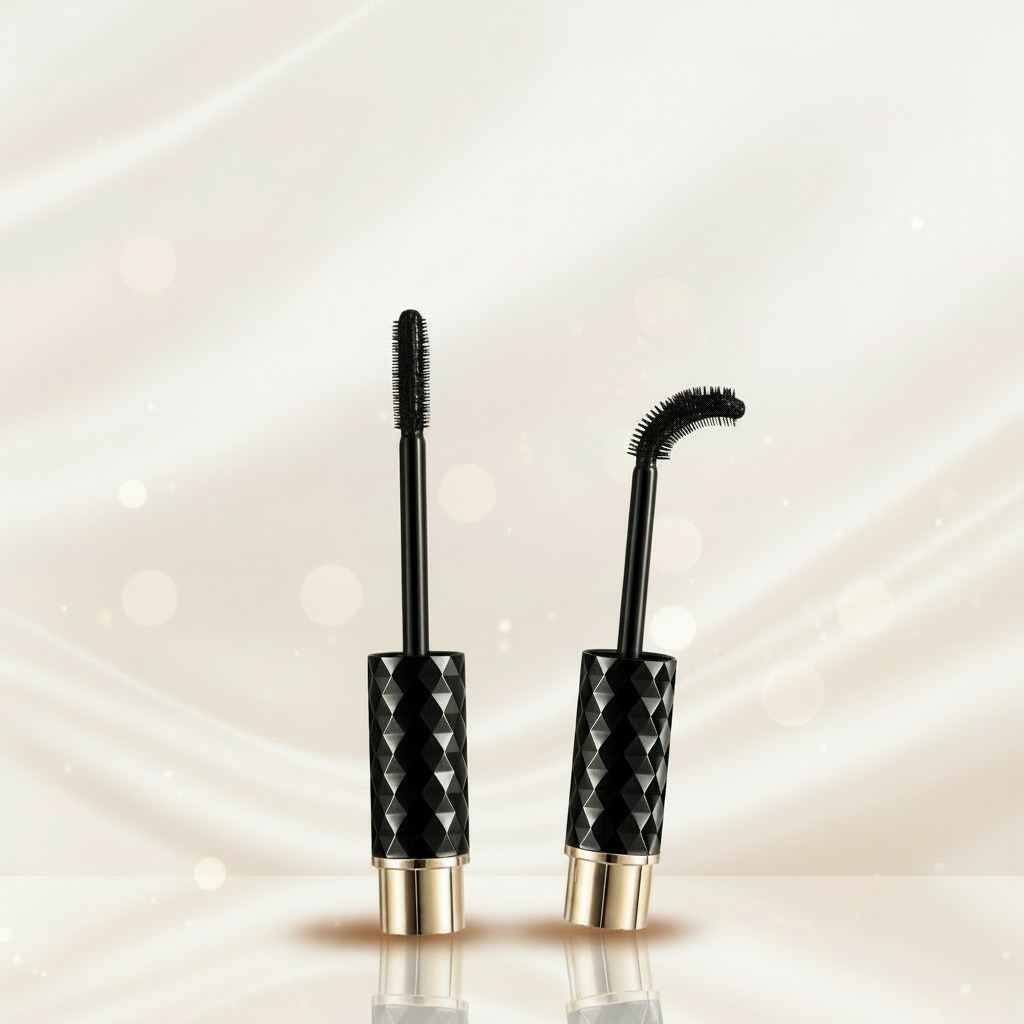
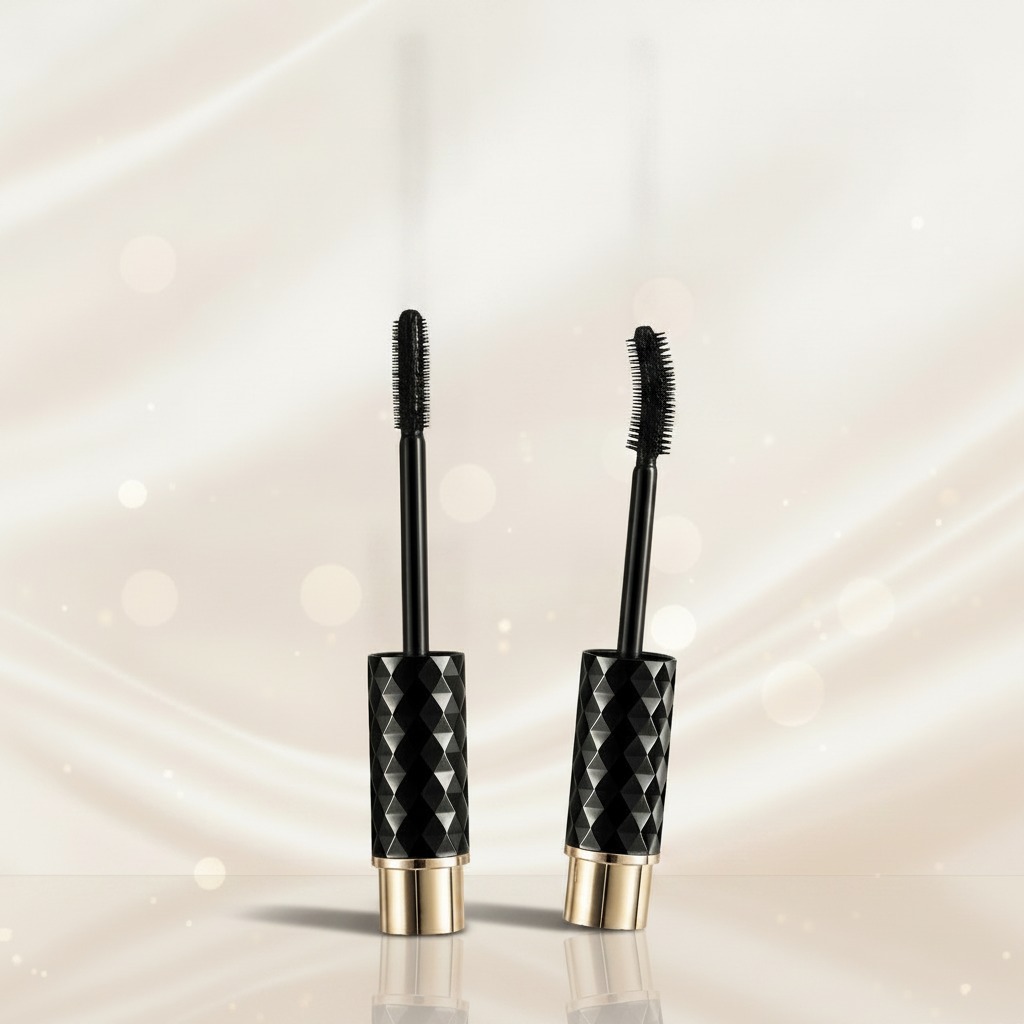
The product shown here is a good reminder of that point. It appears to be a cosmetic mascara applicator or mascara wand assembly with two wand positions: one straight and one curved. That small design choice matters. Straight brushes tend to feel familiar and precise. Curved brushes can help follow the natural arc of the eye, which is useful when the goal is lift, separation, or a cleaner coat from root to tip. For brands planning a private-label mascara, the wand is not a finishing detail. It is part of the performance promise.
What the visible design suggests to a buyer
The applicator has a slim black wand stem, a small bristle brush head, and a cylindrical barrel with a glossy black faceted or diamond-patterned outer finish. A metallic gold-toned lower collar/base section adds contrast. None of that guarantees formula compatibility, of course, but it does tell a sourcing team a few practical things.
First, the presentation is aimed at retail cosmetics rather than industrial dispensing. Second, the decorative barrel suggests a brand that cares about shelf appeal and tactile identity. Third, the compact brush head points toward controlled application rather than a bulky volume brush. That is often where lengthening mascaras win: they coat each lash cleanly instead of building a heavy, thick look.
Straight brush or curved brush?
For beauty buyers, this is not an abstract design debate. It affects consumer behavior, return complaints, and even how a product is merchandised online.
Straight wand
A straight wand is usually easier to explain and easier for first-time users to understand. It can feel more precise for lower lashes and for applying product close to the lash base. If your brand message is clean separation and natural extension, this is a safe and familiar route.
Curved wand
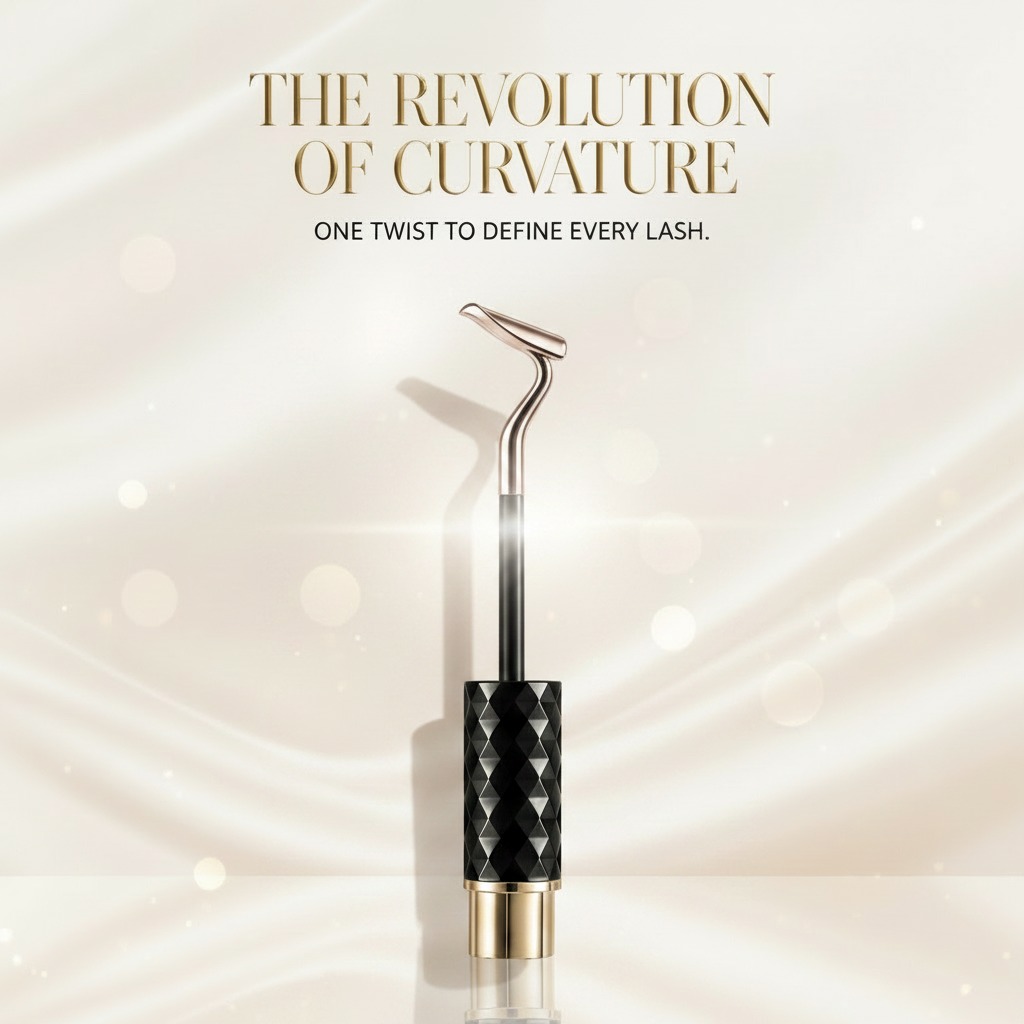
A curved brush is often chosen for lash lifting, shape control, and a more deliberate sweep along the eye contour. It can help users reach from root to tip in a single motion. In practice, that can make a formula appear more lengthening because the lashes look better aligned before the pigment even dries.
That said, curved wands are not automatically better. Some users love the guidance; others find them fussy. If the target market is broad retail, the brush geometry should be matched to the actual consumer. A dramatic evening mascara and a daily lengthening mascara do not need the same hand feel.
What matters in cosmetic packaging and applicator assembly
From a manufacturing standpoint, mascara packaging is a coordination problem. The tube, collar, wand, brush head, and finish all need to behave like one system. The visible black faceted body and gold-toned lower section suggest an injection-molded plastic base with a decorative surface treatment or metallic-look trim, though the exact process cannot be confirmed from the image alone.
For sourcing teams, the important questions are more practical than glamorous:
Will the brush geometry deliver the product load your formula needs? Will the decorative finish hold up during filling, capping, transport, and retail handling? Does the barrel design create a premium feel without making assembly harder than it needs to be? Those are the questions that separate a marketable mascara from a pretty sample.
Common mistakes when choosing a lengthening mascara package
One common mistake is selecting a striking bottle design and then forcing the formula to fit it. That can lead to overloading, stringy pickup, or weak separation. Another is choosing a brush shape based on trend rather than use case. A curved wand may look more engineered, but if the consumer base wants simple one-pass application, the product can become harder to sell.
Buyers also sometimes overlook the relationship between the wand and the brand’s promise. If the claim is lengthening, the package should visually support lightness, control, and definition. A heavy-looking tube with a large brush can send the opposite message, even before the first swipe.
Practical buyer advice for sourcing teams
If you are evaluating a mascara applicator or private-label tube, start with the consumer result you want, then work backward. Ask whether the user should see separation, lift, extension, or a combination of the three. Then compare brush style, stem shape, and barrel appearance against that goal.
For beauty brands, a dual-wand presentation like the one shown here can also be useful in concept development. It gives you a way to test straight-vs-curved positioning without redesigning the entire package. That can save time during line reviews, especially when product teams are still deciding how aggressive the mascara should feel in use.
FAQ
Is a curved wand always better for lengthening mascara?
No. It can help with lash lift and contour-following, but the right choice depends on the target user and the formula’s behavior.
Does the barrel design matter if the brush is good?
Yes. The barrel affects shelf appeal, handling, and brand positioning, all of which influence buying decisions.
Can one applicator work for both separation and lengthening?
Sometimes, but only if the brush head, stem, and formula are matched carefully. Otherwise the product can lean too wet, too thick, or too sparse.
A sensible next step
If your team is building or refreshing a lengthening mascara line, treat the applicator as part of the product brief, not an accessory. Compare straight and curved options early, test how the brush loads and releases formula, and check whether the decorative packaging supports the price tier you are targeting. That is where a lot of mascara launches are won—or quietly lost.