Why a luxury beauty set can sell a complexion product before the shopper even opens it
A luxury beauty set is not just about a shiny box or a giftable ribbon. In cosmetics, presentation carries a practical job: it signals how the product should be used, where it fits in a routine, and what kind of buyer it is meant to impress. That matters especially for compact powders and finishing products, where the first impression often decides whether a consumer sees a daily staple or an impulse buy.
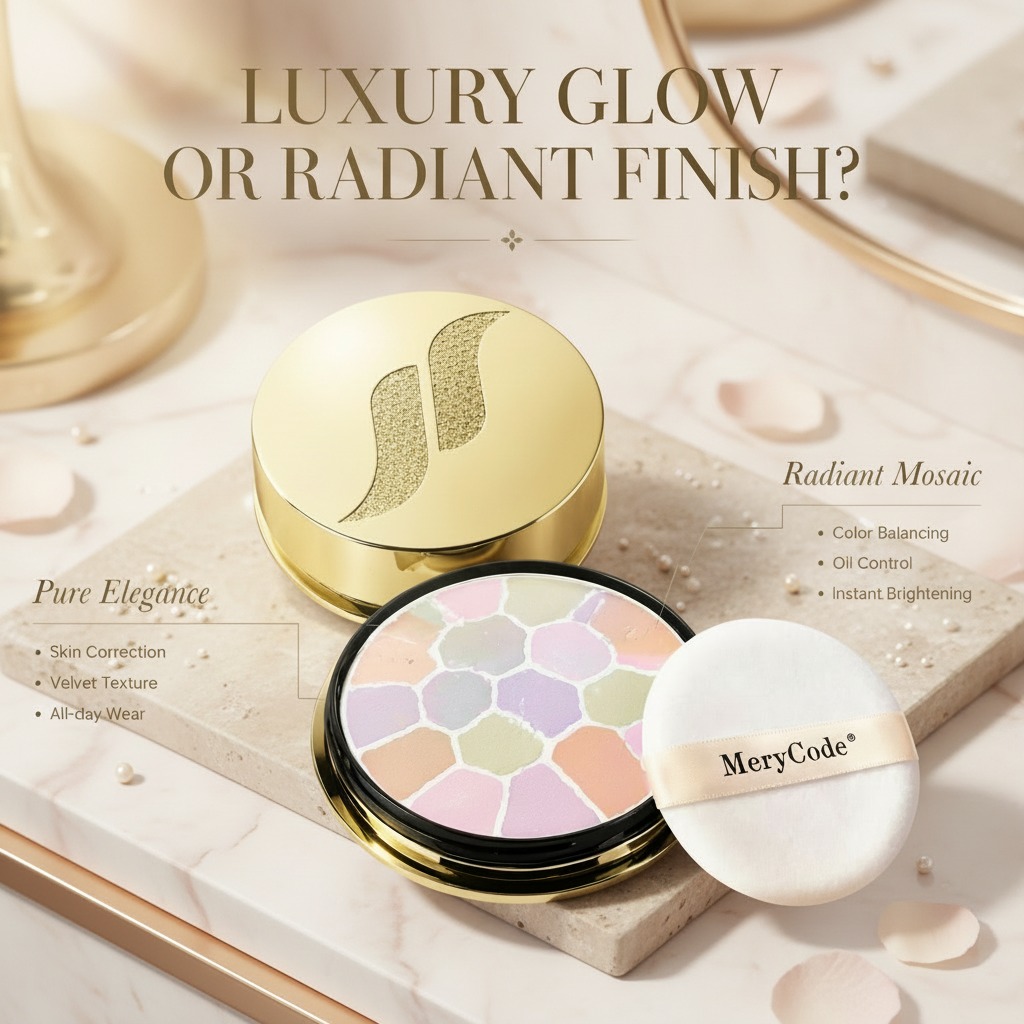
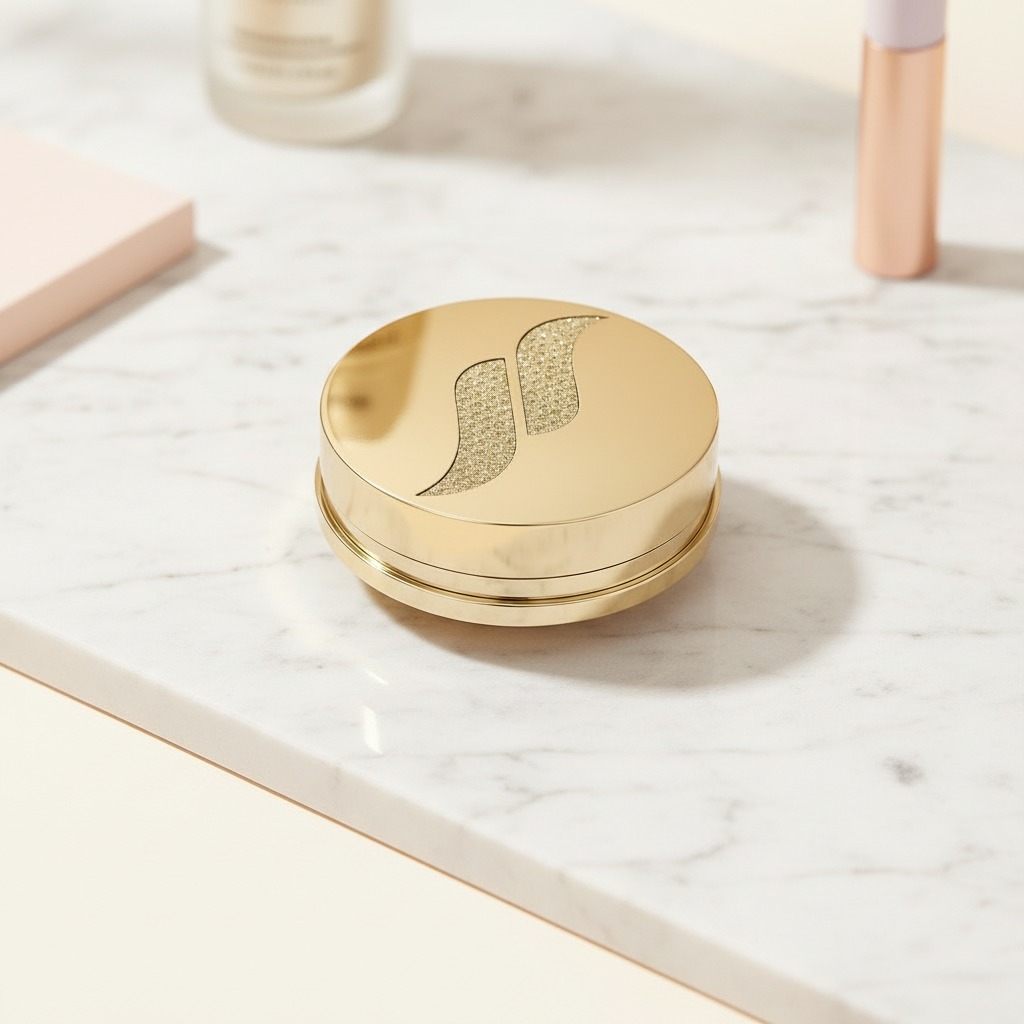
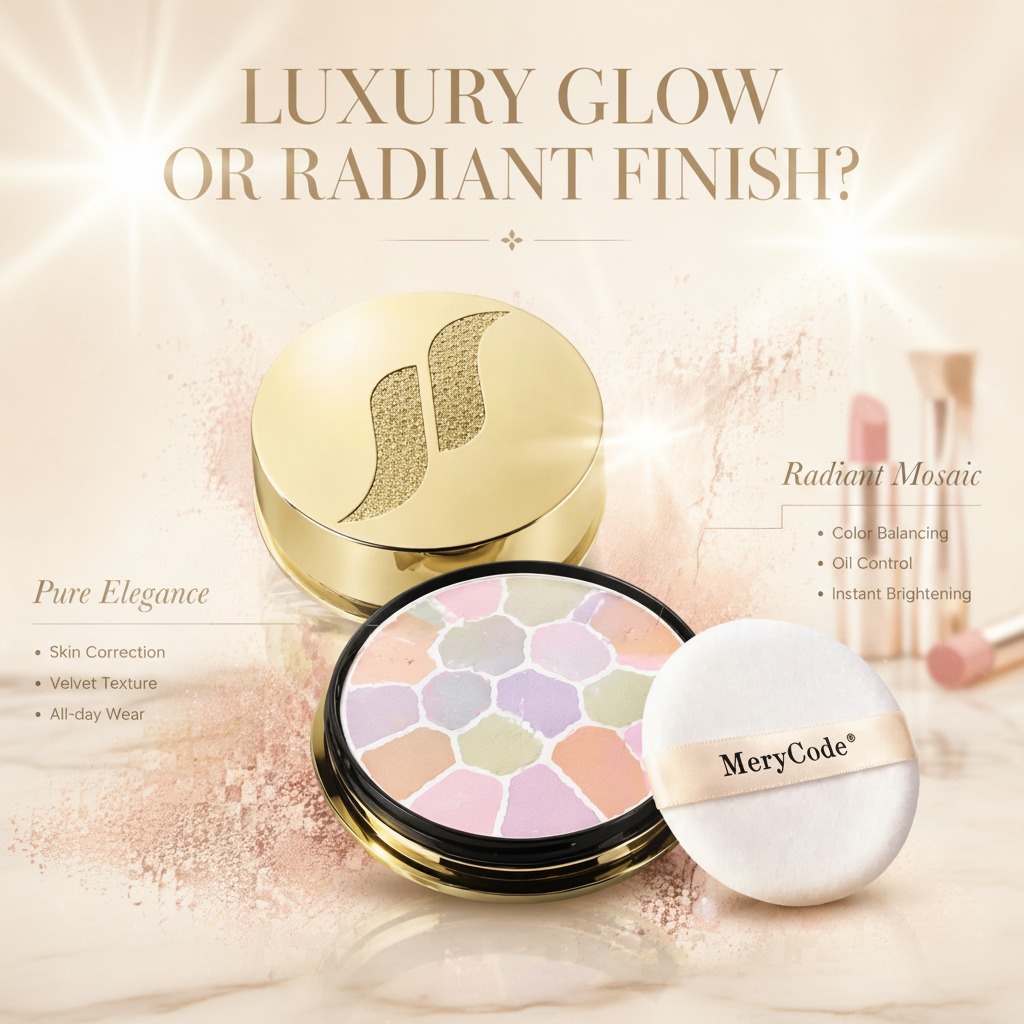
The compact described here leans heavily on that idea. A round gold-toned case, reflective finish, black inner rim, and white puff with the MeryCode mark all tell a familiar retail story: polished, portable, and meant to feel a little more elevated than an ordinary face powder. The interior pastel mosaic pattern adds another layer of intrigue. Whether those multicolor zones are functional or partly decorative is not confirmed, but the visual effect clearly pushes the product toward the premium end of the shelf.
What this type of compact is trying to do
Based on the supplied product information, this looks like a pressed complexion powder or a color-correcting finishing powder. The claims attached to it point in a few directions at once: skin correction, matte-soft texture, all-day wear, oil control, instant brightening, radiant finish, and luxury glow. That combination is common in modern complexion products because buyers want fewer steps and more visible payoff from a single compact.
For sourcing teams and product planners, the key question is not whether the language sounds attractive. It is whether the product design supports the claim. A pressed powder with a mosaic or multi-shade surface often suggests blending different pigments for tone balancing. In practice, that may help soften dullness or create a more luminous finish, but the exact effect depends on the formula, particle size, and how much product is picked up on the puff. Since those details are not provided here, any performance promise should be treated carefully.
Quick buyer takeaways before you compare suppliers
If you are evaluating a product like this for retail, private label, or premium gifting, the purchase decision usually comes down to three things:
First, the compact has to look expensive without becoming fragile or awkward to use. Second, the finish needs to match the claim set; “brightening” and “oil control” do not always sit comfortably together unless the formula is well balanced. Third, the packaging has to survive transit and customer handling, because a luxury look means little if the lid scuffs easily or the powder crumbles inside the case.
That last point is worth a pause. Decorative pressed powders can travel well in photos and still disappoint in distribution. Buyers should ask how the product behaves in shipping, whether the puff is protected, and whether the compact closes securely. Those are not glamorous questions, but they are the ones that save returns.
How the mosaic powder style differs from a plain pressed powder
Visual merchandising value
The pastel cracked-cell effect is immediately more eye-catching than a flat beige pan. On a shelf or in an online thumbnail, it reads as premium, feminine, and somewhat artisanal. That can be useful for a luxury beauty set meant for gifting, seasonal promotions, or display-driven retail.
Functional uncertainty
What the mosaic does chemically or cosmetically is not confirmed. Sometimes multicolor powders are designed to balance undertones; sometimes the pattern is mostly a branding decision. Buyers should not assume that the visual complexity automatically means broader skin-tone performance. Ask for formulation documentation, application guidance, and stability information before making claims of correction or brightening in your own marketing materials.
What sourcing managers should check first
For a compact like this, the practical review should start with the case and move inward. The metal-look gold exterior may be a real metal component or a coated cosmetic case; the image alone does not confirm the material. Either way, the finish should resist fingerprints and micro-scratches, because luxury packaging that dulls quickly loses its appeal.
Next, inspect the hinge and closure feel. Premium cosmetics often fail in small mechanical ways: a lid that opens too easily, a weak snap, or a mirrorless interior that feels incomplete for the price point. Also confirm whether the puff is intended for daily application or just presentation. A branded applicator can strengthen the set’s identity, but only if it performs cleanly and does not shed or distort the powder surface.
Common mistakes buyers make with products like this
One common mistake is overreading the packaging. A rich gold compact can make a product feel more advanced than it is. Another is assuming that “all-day wear” or “oil control” will hold up across climates and skin types without any supporting test data. In cosmetics, the wording may be aspirational, but the retailer still carries the reputational risk if the customer experience falls short.
Another practical slip is neglecting the fit between design and target user. A luxury beauty set works best when the audience wants both utility and vanity. If the market is strictly performance-first, a simpler compact may be more convincing. If the market is gifting or premium impulse purchase, the visual story matters a great deal more.
FAQ buyers tend to ask
Is the pastel mosaic pattern definitely functional?
Not from the information provided. It may be functional, decorative, or both.
Can the product be described as a brightening powder?
Only cautiously, unless the supplier can support that claim with formulation details or testing. The image and product notes suggest that direction, but they do not prove it.
Does the compact itself look suitable for premium retail?
Yes, the gold reflective case and branded puff give it a giftable appearance. The real test is whether the structure feels as polished in hand as it looks in photos.
What to ask before placing an order
Before you approve a sample or commit to a production run, ask for the exact product name, ingredients, and packaging specification. Confirm whether the compact is refillable, what the case material is, how the puff is built, and whether any performance claims can be substantiated. If you plan to market it as part of a luxury beauty set, ask for packaging options that preserve the premium look through shipping and store handling.
If you are comparing multiple complexion products, request side-by-side sample evaluation under warm indoor light and natural daylight. Luxury cosmetics often win on first glance, but the deciding factor is usually how the powder sits on skin after a few hours, not how elegant the compact looks on a counter.
Next step
If you are building a private-label or retail assortment around a luxury beauty set, start with the compact’s material, formula behavior, and packaging durability before you commit to branding. A strong visual concept can open the door. Reliable performance and honest claim support are what keep it open.